


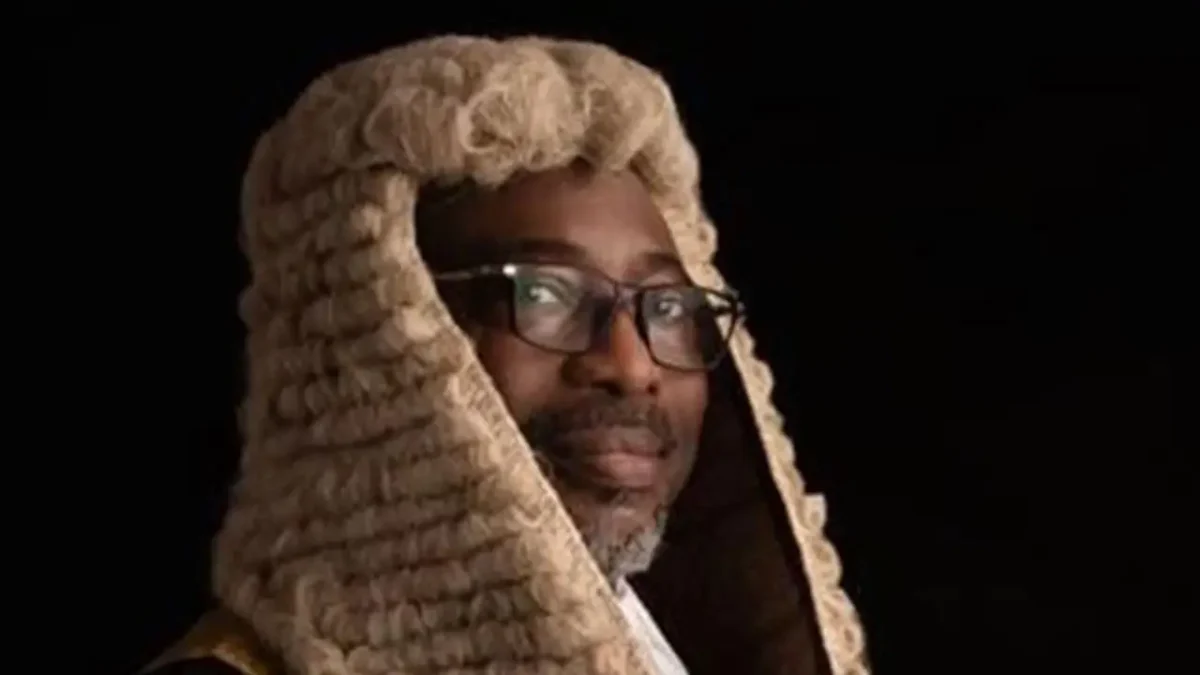
The Lagos State Attorney-General and Commissioner for Justice, Lawal Pedro, SAN has clarified its stance on the controversial proposed amendment to the Magistrates Law, emphasising that the bill aims to fix a career stagnation crisis created by recent constitutional changes affecting High Court judges.

In a statement issued on Monday, the State Attorney-General and Commissioner for Justice addressed public debate surrounding the bill currently before the Lagos State House of Assembly, which seeks to raise the retirement age of Magistrates and Law Officers.
Pedro clarified that the bill was introduced as a Private Member’s Bill rather than an executive measure, though the justice ministry supports its merits.
Addressing career stagnation
According to the AG, the core trigger for the reform stems from the 1999 Constitution’s Fifth Alteration (No. 37) Act 2023, which extended the mandatory retirement age of High Court Judges from 65 to 70 years.
While the constitutional change helped retain experienced judges, Pedro noted it unintentionally choked the career progression of lower bench officers and senior state attorneys.
“The extension of the retirement age of High Court Judges has had a consequential effect on the career progression structure within the lower judiciary and the Ministry of Justice.
“The number of vacancies occurring on the High Court Bench has correspondingly diminished, thereby narrowing the traditional pathway through which experienced Chief Magistrates and senior Law Officers could progress,” Pedro stated.
Under the current setup, highly experienced Magistrates and Law Officers face mandatory retirement at age 60, losing out on elevation opportunities that previously existed when High Court vacancies opened up more frequently.
Policy continuation, not special privilege
Pedro countered claims that the bill creates an unfair advantage for state legal workers, describing it as an extension of Lagos State’s long-standing 1997 harmonisation policy, which aligns the service conditions of Law Officers with those of Magistrates.
He highlighted that states like Abia, Kogi, Benue, Imo, Kwara, and Osun already have similar frameworks.
In fact, Osun State enacted a law in December 2023 raising the retirement age for judicial administration officers, including state counsel, to 65 years.
Key provisions of the proposed amendment
If passed into law, the proposed framework will offer flexibility while establishing a clear cap on service:
Optional Retirement: Officers may choose to retire upon attaining 60 years of age.
Mandatory Retirement: Officers must step down upon reaching 65 years of age or completing 40 years of service, whichever comes first.
Pedro urged the public and legal stakeholders to view the bill objectively rather than through emotional sentiments, framing it as a necessary measure to retain institutional knowledge, ensure effective mentorship for younger lawyers, and maintain stability across the state’s legal framework.
