


Funke Busari
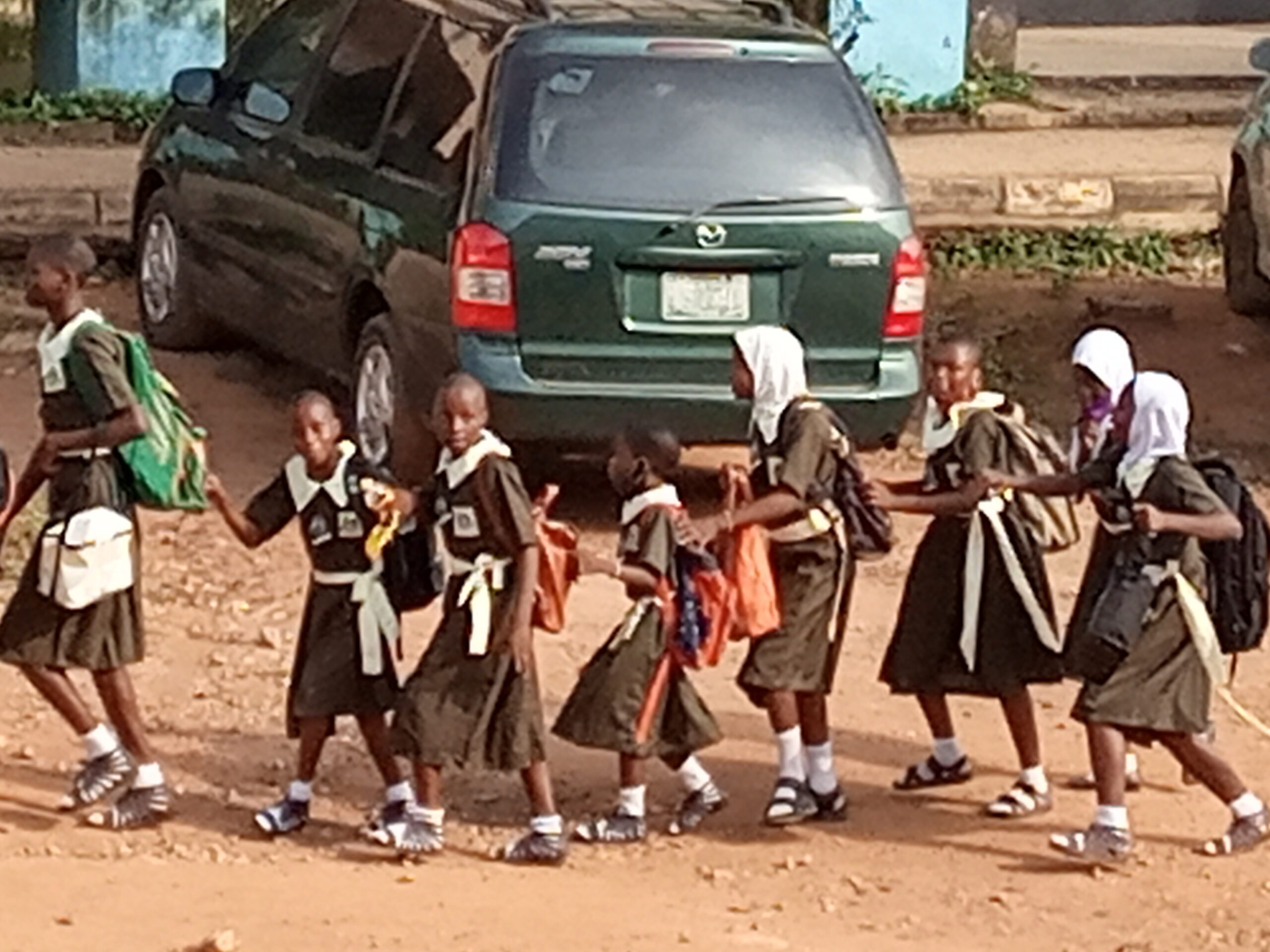
Dilemma is the word that describes the present situation of parents, teachers and school pupils in Nigeria right now.

Some stakeholders are convinced that opening the school for In-Person learning could be disastrous but others differ in opinion.
Their concern is understandable, the spike of Coronavirus, COVID-19 spread amidst the second wave is not smiling at anyone.
The school system that Nigeria is known for is “To use education as a tool for fostering the development of all Nigerian citizens to their full potentials, in the promotion of a strong, democratic, egalitarian, prosperous, indivisible and indissoluble sovereign nation under God,” according to the Federal Ministry of Education’s mission statement. (https://education.gov.ng/)
Statistics available on the persons enrolled in schools across the country says, “In 2018, 6.8 million students in Nigeria were enrolled in low secondary schools. The official junior secondary education age in Nigeria goes from 12 to 14 years old. As of 2018, private and public middle schools in Nigeria counted 4.9 million students aged 12 to 14 years, holding 72 percent of the total number of students in junior secondary schools. Some 28 percent of scholars were either younger or older than the ordinary age for this educational level.”
Considering this, or as official statistics of rise in transmission presently stands, if the steathly enemy is lurking in the body of a ‘Super-Spreader’ as asympthomatic patient (patient showing no symptom) is among school pupils, then the country might be set to cut short the lives of its citizens it intends to groom to reach developmental potentials.
A case study of the findings of some researchers who found that a small number of infected, asymptomatic school-aged children in an area of Eastern Ugandan are responsible for the majority of remaining malaria circulating in local mosquitoes is a cue in this instance, and here the country is battling with not malaria, but Coronavirus.
The spiral effect of opening the schools is not even better to be imagined than experience.
In the wake of the COVID-19 disruption in March 2020, the schools were kept under lock and key until September when academic activities were resumed on the premise that non-pharmacitical practices be observed to stem the spread of the deadly virus.
With the mutation of a new strain of the virus, the situation shows no sign of letting up.
Yet press reports such as the following: COVID-19: House of Representatives wants the Federal Government to postpone reopening of schools by 3 months
COVID-19: Stakeholders back reopening of schools, if…
Jan 18 school resumption date stands—FG, amongst others have indicated the response strategy of the government.
In the light of the above, it leaves one to wonder, Why are Nigeria schools opening? Are the cases dwindling? Has the country been declared free of the virus? Not as at January 18.
However, schools nationwide are reopening today when the House of Representatives is not comfortable with the reopening until a much later date.
It is interesting to note the reason. Notions by some analysts and stakeholders both in the health and educational sectors aired on a monitored program on Monday suggest that schools are not drivers of the disease and that keeping the school closed for a longer time will do more of dis-service than help the children, who prior to the distruption are being hampered educationally, all because majority of Nigerian citizens are poor, adding that further closure of the schools might amount to mental distress.
Analysts have opined that advance countries could afford to stay off physical schools and engage on online schooling because of the infrastructure already put in place by their governments and their compliance level.
The analysts say for a country like Nigeria, where basic infrastructure are lacking in many public schools, such ‘luxury’ of keeping the school shut a little more could not be afforded.
However, their submissions have tilted towards the stand of the United Nations Children’s Fund, UNICEF on the issue as communicated in its statement of January 12, 2021: that schools are not drivers of the pandemic.
Recall that the organisation, UNICEF, originally known as the United Nations International Children’s Emergency Fund, was created by the United Nations General Assembly on 11 December 1946, to provide emergency food and healthcare to children and mothers in countries that had been devastated by World War II, and by extension to address the long-term needs of children and women in developing countries; to realizing the rights of all children to help them build a strong foundation and have the best chance of fulfilling their potential.
The organisation also believes that ensuring a happy and healthy child begins before birth: from ensuring his/her mother has access to good neonatal care and delivering in a clean, safe environment to reaching adulthood as a responsible, healthy and informed parent to the next generation, vis-à-vis its pledge in the interest of a child having access to shelter, good nutrition, clean water, sanitation, healthcare and education.
The organisation response to how COVID-19 could further impact school children; and what it cannot afford is reproduced thus:
As we enter the second year of the COVID-19 pandemic, and as cases continue to soar around the world, no effort should be spared to keep schools open or prioritize them in reopening plans.
“Despite overwhelming evidence of the impact of school closures on children, and despite increasing evidence that schools are not drivers of the pandemic, too many countries have opted to keep schools closed, some for nearly a year.
“The cost of closing schools – which at the peak of pandemic lockdowns affected 90 per cent of students worldwide and left more than a third of schoolchildren with no access to remote education – has been devastating.
“The number of out-of-school children is set to increase by 24 million, to a level we have not seen in years and have fought so hard to overcome.
“Children’s ability to read, write and do basic math has suffered, and the skills they need to thrive in the 21st century economy have diminished.
“Their health, development, safety and well-being are at risk. The most vulnerable among them will bear the heaviest brunt.
“Without school meals, children are left hungry and their nutrition is worsening. Without daily interactions with their peers and a reduction in mobility, they are losing physical fitness and showing signs of mental distress. Without the safety net that school often provides, they are more vulnerable to abuse, child marriage and child labour.
“That’s why closing schools must be a measure of last resort, after all other options have been considered.
“Assessing the risk of transmission at the local level should be a key determinant in decisions on school operations. Nationwide school closures must be avoided whenever possible. Where there are high levels of community transmission, where health systems are under extreme pressure and where closing schools is deemed inevitable, safeguarding measures must be put in place. This includes ensuring that children who are at risk of violence in their homes, who are reliant upon school meals and whose parents are essential workers are able to continue their education in their classrooms.
“In case of lockdown, schools must be among the first to reopen once authorities start lifting restrictions. Catch-up classes should be prioritized to ensure that children who have been unable to learn remotely are not left behind.
“If children are faced with another year of school closures, the effects will be felt for generations to come” (https://www.unicef.org/press-releases/children-cannot-afford-another-year-school-disruption)
In December however, UNICEF bore its mind on the implementation of protocols to keep schools safe in Nigeria.
An health specialist with the organisation Dr. Charles Nwosisi, advocated, “It is our priority that key public services in Lagos – like education – have COVID-19-proof plans so that children can continue receive an education while lowering the risk of spreading this disease.”
