


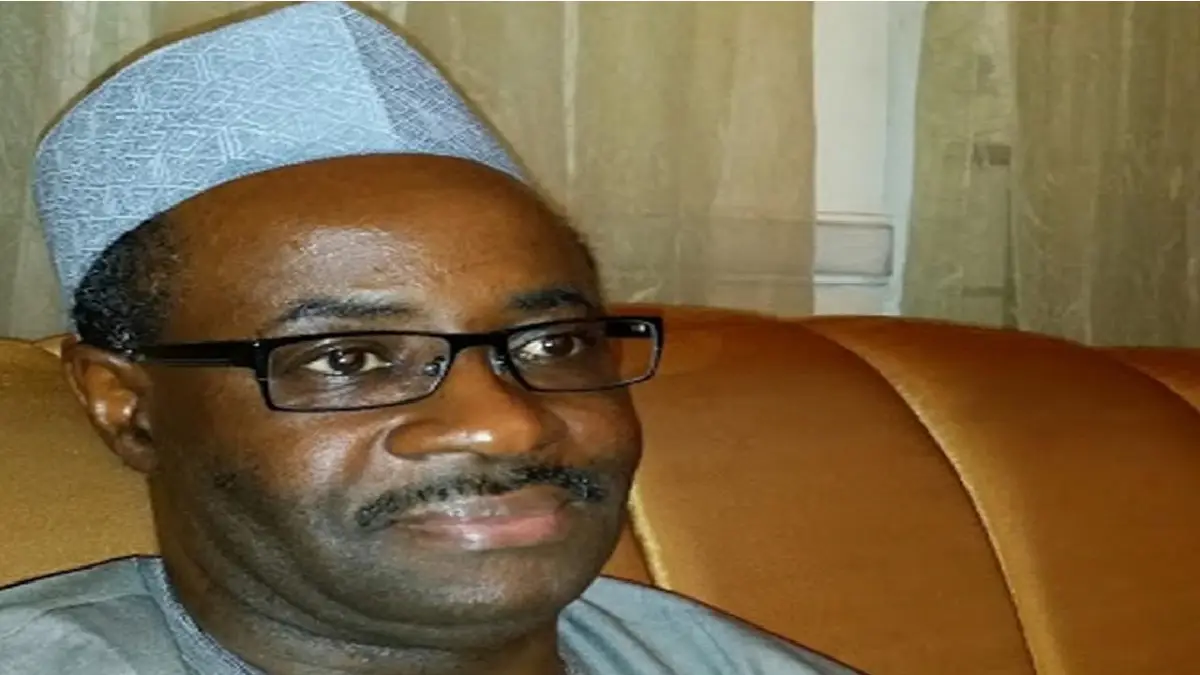
- Tanimu Yakubu, DG Budget Office
In early 2024, Nigeria’s naira collapsed to ₦1,800 per dollar, rattling households and businesses alike. By August, 2025, it had strengthened to ₦1,525. For President Bola Ahmed Tinubu, this was not just recovery but the opening proof of his broader political economy: building Nigeria on three foundations — credible currency, concrete infrastructure, and kilowatts of power.
Political economy: Key aspects
Currency reform was the first bold stroke. By floating the naira, clearing a $4 billion foreign exchange backlog, and bringing remittances into official channels, the government restored some measure of trust. For traders, it meant fewer shocks when pricing goods. For students abroad, it meant less uncertainty over tuition. For investors, it meant a government that honoured obligations. The naira, long a burden to defend, began to look like a tool to deploy.
Infrastructure has been Tinubu’s second lever. More than N5.9 trillion has gone into projects in the Northwest, his electoral base, but their benefits ripple nationwide. The Kaduna–Kano Expressway, Kano– Maiduguri Highway, and Sokoto–Illela Corridor cut travel times and lower costs for farmers and traders. Lagos, reframed as a logistics hub, connects northern produce to southern ports and eastern manufacturers to western markets. Concrete here is less a regional trophy than a national glue.
Yet roads without power remain empty. The revival of 255 megawatts Kaduna Power Plant shows how electricity must animate infrastructure. For factories, kilowatts mean extra shifts and more jobs. For clinics, they mean functioning refrigerators for vaccines. For children, they mean studying under electric light rather than kerosene lamps. Renewables strengthen the justice dimension: solar irrigation in Zamfara demonstrates how energy can power farms and livelihoods as well as industry.
The most ambitious vision is the Tinubu National Beltway, a Calabar–Maiduguri–Sokoto arc that redraws Nigeria’s map. But it is not alone. With work on Badagry– Lagos expressway, the Illela–Sokoto corridor, and the Lagos–Calabar Coastal Super Highway, Tinubu is effectively sketching a square of dual carriageways across the federation. The Beltway curves, the coastal and northern lines straighten — forming a lattice of asphalt that stabilises the country. It is geography turned into strategy: a deliberate grid that holds together Nigeria’s diversity.
This continuity builds on his predecessor’s legacy. Muhammadu Buhari poured concrete into signature projects — railways, bridges, and the Second Niger Bridge. Tinubu extends that legacy, turning Buhari’s lines into loops, spines into squares. Rather than rivals, the two appear as successive masons: Buhari laying the pillars, Tinubu closing the frame. The partnership is political continuity made visible in concrete and steel.
Critics dismiss this as propaganda, pointing to charts suggesting Lagos benefits most or that projects tilt northward. Yet the truest measure is lived experience: the driver who now saves hours on a repaired highway, the trader whose goods arrive in Lagos sooner. Hashtags fade; asphalt endures.
Risks remain. Nigeria has a history of stalled projects and rising costs. Inflation bites households even as reforms strengthen exporters. Security looms as a constant threat — a rebuilt road can be rendered useless overnight by banditry. And without deeper financial markets, FX stability will remain vulnerable.
Still, Tinubu’s wager is clear. Currency credibility fuels competitiveness. Concrete stitches the federation into one market. Kilowatts power productivity and dignity. From fragility to foundations, he extends Buhari’s groundwork and sets Nigeria on a course where economic geography and political coalition are bound together.
