


Legal expert and Managing Partner of Perchstone & Graeys, Dr. Tolu Aderemi, has issued a direct challenge to African leaders, the African Union, and the African Development Bank, arguing that decades of trade focused intervention in the continent’s most fragile states have failed to deliver the stability they promised, and that continued reliance on this approach will produce the same disappointing results.
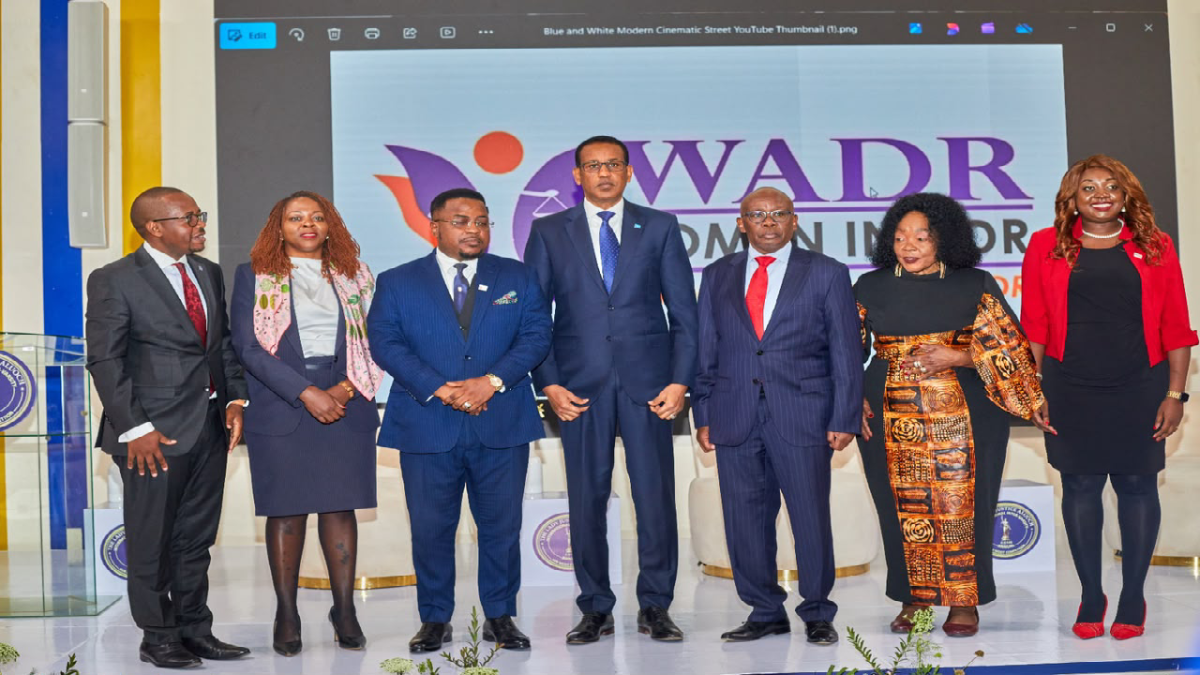
Speaking as keynote speaker at the Lady Justice Joyce Aluoch Moot Competition in Nairobi, jointly organised by United States International University Africa and Women in ADR Kenya, Dr. Aderemi delivered a pointed analysis of why trade alone has consistently failed to transform conflict affected economies across Africa and the wider world.
The event, held in honour of retired International Criminal Court judge Lady Justice Joyce Aluoch, drew senior diplomatic and legal figures including Jabril Ibrahim Abdulle, Ambassador of the Federal Republic of Somalia to Kenya and Permanent Representative to the United Nations Office at Nairobi, who attended as Special Guest of Honour. Professor Githu Muigai, former Attorney General of Kenya, also featured as Special Guest.
Addressing delegates on the theme “From Conflict to Consensus: Leveraging Trade to Transform Conflict Affected Economies,” Dr. Aderemi examined Iraq, Libya, Somalia, and Sudan as evidence of a recurring policy failure. In each case, he argued, trade initiatives were introduced without the underlying institutional and security architecture required to sustain them, and collapsed as a result.
On Libya specifically, Dr. Aderemi noted that fractured governance and the absence of a unified security framework rendered every trade led reconstruction effort structurally unsound from inception.
“You cannot build commercial confidence on institutional quicksand,” he said.
“Libya did not fail because it lacked trade opportunities. It failed because no functioning state existed to enforce contracts, protect capital, or guarantee that today’s agreement would still hold tomorrow.”
He extended this analysis across the other case studies, stating plainly that trade has never, in any documented instance, independently rebuilt a fractured economy. “Trade only ever works as the second act, after peace and institutions are already secured,” he said, citing precedents including the 1950 Schuman Declaration, the 1998 Peru Ecuador peace agreement, and the 1979 Egypt Israel accord as models where sequencing was respected and stability followed.
Turning to continental statistics, Dr. Aderemi noted that intra African trade currently stands at 15 to 18% of total trade, compared to more than 60% within the European Union.
He stated that while the African Continental Free Trade Area is projected to add $450 billion to regional income by 2035, this projection remains fiction while conflict persists across the Sahel, eastern Democratic Republic of Congo, and Sudan.
“This is not a trade problem. It is a sequencing problem, and only the African Union is positioned to fix it,” Dr. Aderemi said, delivering what he described as a non negotiable message to the continent’s institutions.
He called directly on the African Union to substantially increase funding for the Continental Early Warning System, stating that current resource allocation is grossly inadequate.
He issued an equally direct message to the African Development Bank, urging that development financing be restructured to condition trade linked disbursements on measurable peace and institutional benchmarks, rather than treating trade and stability as parallel, unrelated tracks.
“AfCFTA implementation and the African Peace and Security Architecture must move together, corridor by corridor. Anything less is institutional negligence dressed up as policy,” he said.
“Build the economic interdependence between African neighbours now, deliberately, so that tomorrow’s wars become materially costly before a single shot is fired.”
He pointed to Rwanda’s post genocide trajectory, nearly 7% annual economic growth sustained over two decades, as definitive proof that prioritising peace and institution building first produces measurable, compounding returns that trade alone has never delivered anywhere on the continent.
Dr. Aderemi closed with an unambiguous appeal to African leaders. “Africa doesn’t have to keep choosing consensus after the conflict, exhausted, counting the dead. We can choose it before. The African Union, the African Development Bank, and every government in this room have the tools to make that choice today. What has been missing is not capacity. It is will.”
He called for the urgent establishment of a continental dispute avoidance framework, positioning conflict prevention as a deliberate, fundable policy priority rather than an afterthought to trade liberalisation.
The address adds significant weight to a growing continental conversation on aligning trade liberalisation with peace building architecture, as African institutions continue to assess implementation strategies for AfCFTA amid ongoing instability in several member states.
P
