


It started with a serious allegation at the recently held Nigerian Bar Association, NBA Conference in Port Harcourt.
Martins Vincent Otse, popularly known as VeryDarkMan, VDM, accused some police officers manning checkpoints on major highways of allegedly passing information about travellers to kidnappers and bandits, claiming the information could be used to facilitate abductions for ransom.
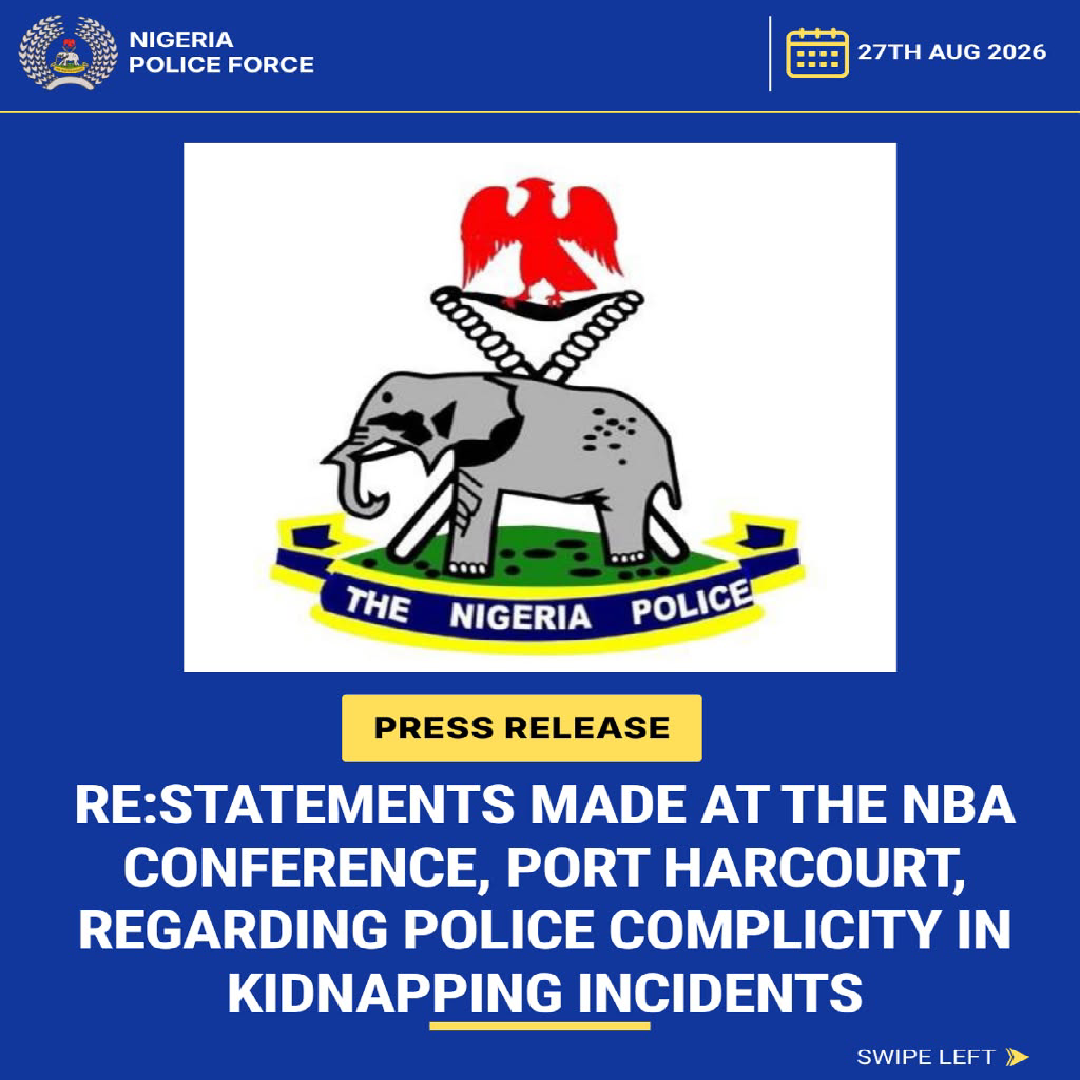
The allegation quickly attracted the attention of the Nigeria Police Force, which has now challenged VDM to provide evidence to support the claim.
In a statement signed by the Force Public Relations Officer, CSP Ani Iniedu, the Police said allegations of such magnitude could not be treated casually, stressing that claims capable of damaging public confidence in a national security institution must be backed by credible evidence.
What triggered the Police reaction?
According to the Police, VDM’s comments suggested that officers at checkpoints identify wealthy travellers and subsequently relay information about their identities and movements to criminal groups.
The Force described the allegation as “unsubstantiated and unfairly damaging” to an institution responsible for protecting millions of Nigerians.
The Police maintained that officers deployed to checkpoints are there to prevent crime, detect criminal activities, protect motorists and other road users and not to assist kidnappers.
It also pointed to the risks faced by officers themselves, noting that policemen have been ambushed, attacked and killed by criminals, while police stations, operational formations and other assets have also come under attack.
Police say majority of officers should not be judged by allegations

Behind the uniforms at checkpoints are officers who, according to the Force, continue to work in difficult and dangerous conditions.
The Police said its personnel operate nationwide, often with limited resources, while being exposed to the same criminals they are expected to keep away from the highways.
For this reason, the Force argued that blanket accusations against the entire institution could demoralise officers who carry out their duties with integrity.
However, the Police also drew a distinction between defending its personnel and shielding wrongdoing.
It acknowledged that where individual officers are found to have compromised their duties, such officers would face disciplinary measures and the law.
In other words, the Force said misconduct by an individual officer should be investigated and punished, but should not automatically become an indictment of the entire Police Force.
Police challenge VDM to produce evidence
Rather than allowing the allegation to remain a matter of public debate, the Police have asked VDM to take the next step.
The Force formally invited him to submit the evidence behind his claims. Specifically, it wants any information showing that police personnel at checkpoints identify wealthy travellers and pass their details or movements to kidnappers for the purpose of facilitating abductions.
The Police said any credible evidence presented would be treated urgently and investigated thoroughly.
This could turn the controversy from a war of words into an opportunity for accountability.
If evidence exists, the Force says it wants to see it.
NBA Conference: Accountability or unsubstantiated claims?
At the heart of the Police response is a delicate question: how can Nigerians hold security institutions accountable without weakening public confidence in them?
The Force said legitimate criticism is necessary because it can expose weaknesses and encourage reforms.
But it warned against making or spreading allegations that have not been substantiated, particularly when they concern national security institutions.
For the Police, there is a significant difference between saying an officer has been accused of misconduct and declaring that an entire institution is involved in criminal activity.
The Force therefore urged anyone with credible evidence of police misconduct to use appropriate channels so that allegations can be properly investigated.
What happens if evidence emerges?
The Police have made it clear that its defence of the institution does not mean officers accused of wrongdoing will be protected.
According to the statement, where misconduct is established, the affected personnel will face internal disciplinary action and the full weight of the law.
That position places the responsibility on both sides.
Security agencies must investigate credible complaints transparently, while members of the public who make serious allegations must be prepared to substantiate them.
For victims and families affected by kidnapping, however, the bigger issue remains public safety.
Every allegation that security personnel may be assisting criminals has the potential to deepen public anxiety about travelling on Nigeria’s highways.
That is why the Police response has gone beyond rejecting the allegation.
It has asked for evidence.
The bigger test Is public trust
The controversy that followed the NBA Conference ultimately touches on something bigger than one speaker and one institution: trust.
Motorists need to believe that checkpoints exist to protect them. Police officers need to know that genuine service will not be dismissed because of the misconduct of a few. And Nigerians need assurance that credible allegations against security personnel will be investigated rather than ignored.
The Police said it remains committed to transparency and accountability and will continue to investigate credible allegations of misconduct “however they arise.”
For now, the Force has placed the ball firmly in VDM’s court. The question is no longer simply what was said at the NBA Conference, but whether the evidence behind the allegation can be produced and, if so, what the investigation will reveal.
