


About 27,529 offenders have passed through the Lagos State Ministry of Justice Community Service Unit since its establishment in 2012 till 2025.
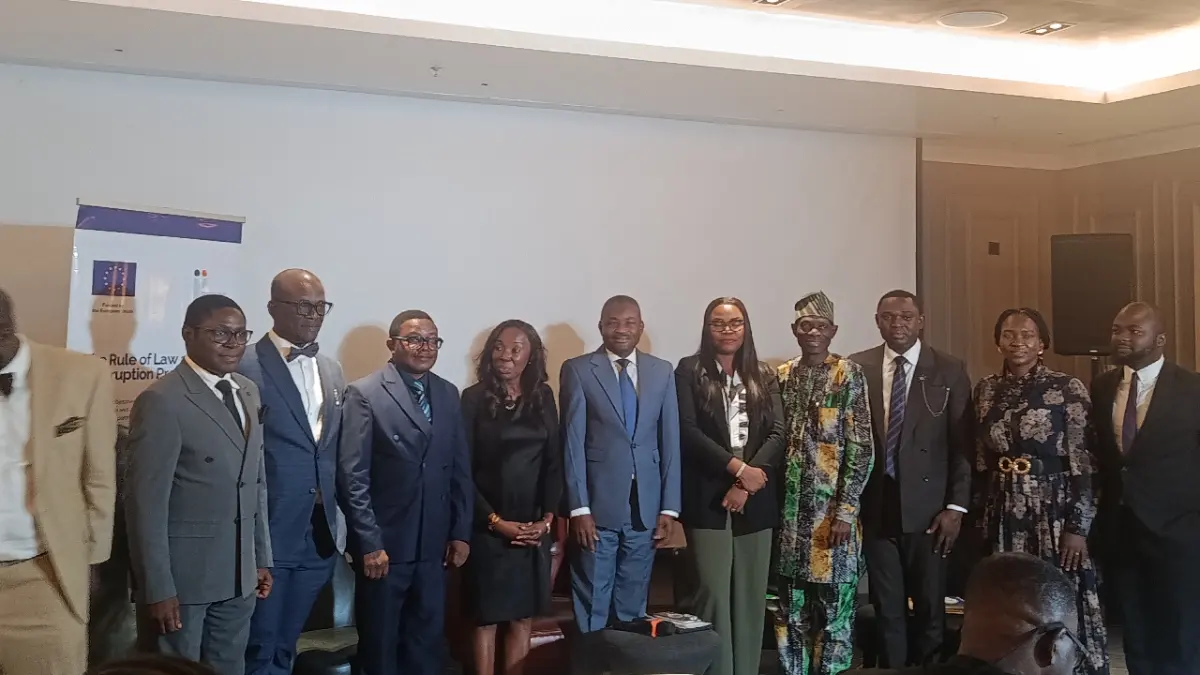
This was disclosed at a stakeholders sensitisation on community service organised by the Lagos State Ministry of Justice Community Service Unit, CSU, in collaboration with International Institute for Democracy and Electoral Assistance (International IDEA) with support from the European Union.
The event themed: Justice That Serves The Community highlighted that 5,440 offenders were supervised and rehabilitated through community service between 2023 and 2025.
Against this background, the Lagos State Ministry of Justice called on collective action from corporate organisations, professional bodies, development partners, civil society organisations, faith-based institutions, educational establishments and community leaders to embrace the sentencing alternative.
The call hinged on the fact that more works need to be done to transform lives, reduce recidivism, decongest correctional facilities and contribute to safer and more productive communities.
To this end, the Lagos State Ministry wants corporate bodies to deepen their involvement in the State’s community service scheme, describing stakeholder participation as critical to the long-term success of non-custodial sentencing in Nigeria’s commercial capital.
The Attorney-General & Commissioner for Justice, Mr. Lawal Pedro, SAN, and the Solicitor-General & Permanent Secretary, Mr. Hameed Oyenuga , represented by Mr. Adebayo Haroun, Esq., the Director of Public Prosecutions, DPP, said that assessments of the scheme have recorded encouraging results, including high compliance rates among offenders, measurable reductions in prison congestion and significant savings in public funds that would otherwise have been spent on short-term incarceration.
Speaking at the engagement attended by legal practitioners from various law firms in the State, human rights advocates, and other stakeholders, Haroun said, “Many offenders who may have entered a cycle of custodial detention have instead been given an opportunity to undertake constructive work, acquire discipline and maintain social stability while serving their sentences.”
According to the DPP, the scheme has proven especially effective in handling minor and non-violent offences, where imprisonment is seen as a disproportionate and counterproductive response.
However, Haroun acknowledged that persistent challenges including manpower limitations, insufficient placement opportunities, logistical constraints and low public awareness continue to hinder its full potential.
At the centre of operations is the Community Service Unit, CSU, which receives offenders sentenced by the courts, conducts individual assessments and assigns them to approved placements across government agencies, public institutions and private establishments.
The CSU supervises compliance, maintains attendance records, liaises with host organisations and submits periodic reports to the courts.
A significant portion of the address was directed at private sector organisations, which Mr. Pedro and Mr. Oyenuga identified as an underutilised partner.
According to Haroun, “The private sector, in particular, has an important role to play. Through Corporate Social Responsibility initiatives, vocational training opportunities, mentorship programmes, skills acquisition support and approved work placements, private institutions can contribute directly to offender rehabilitation and successful reintegration.”
Legal practitioners and the Nigerian Bar Association were also urged to champion awareness of non-custodial measures and help build a more restorative criminal justice framework.
Community leaders were reminded that rehabilitation extends beyond the completion of a sentence, with lasting change depending on social acceptance and opportunities for productive engagement.
“Every successful community service placement has the potential to transform lives, reduce recidivism, decongest correctional facilities and contribute to safer and more productive communities,” the representative said.
Ms. Komolafe Olanrewaju, a Director, MOJ conducted a session with beneficiaries of the community service, who gave testimonies about personal transformation, skills development, employment opportunities and their reintegration in the society.
A panel session moderated by Joke Aladesanmi, Esq., the Founder of CELSIR x-rayed the challenges of successful implementation of community service scheme and possible solution to the various challenges and how to effectively support the CSU scheme.
