Eight years ago, precisely in 2018, Nestlé Nigeria PLC decided to work with the media to advance health awareness and promote nutrition.
Particularly, the organisation, in partnership with the Lagos Business School, LBS, deliberately created an opportunity for media practitioners to expand their knowledge in health and environmental reporting.
The programme is targeted at sustaining, preserving the environment and recycle.
This time around in the year 2025, Nestlé Nigeria again brought selected senior journalists together for a four-day online programme, followed immediately with a three-day In-person class at the LBS.
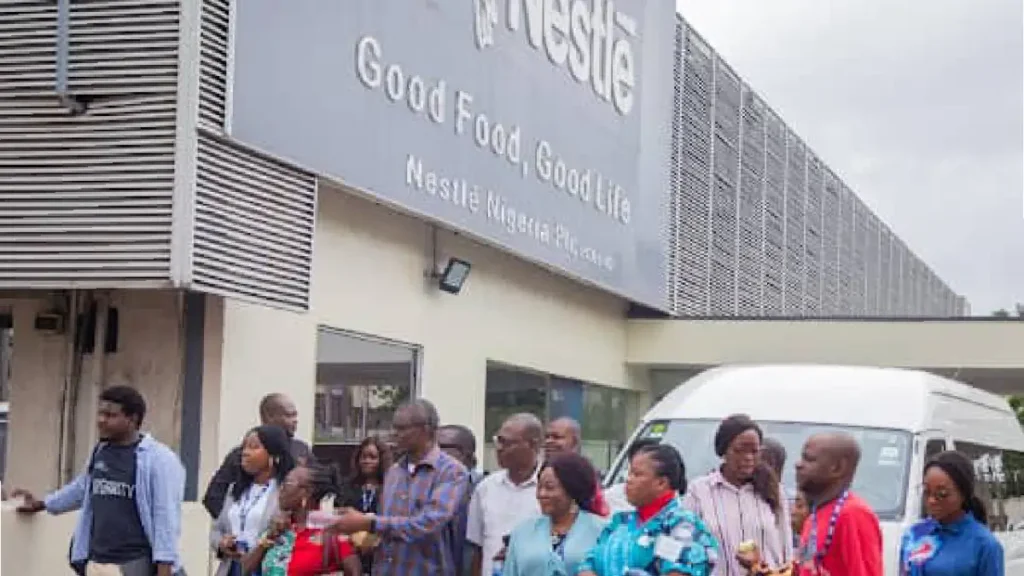
The modules enhanced the capacity of participants who are now referred to as executives in advancing environmental sustainability.
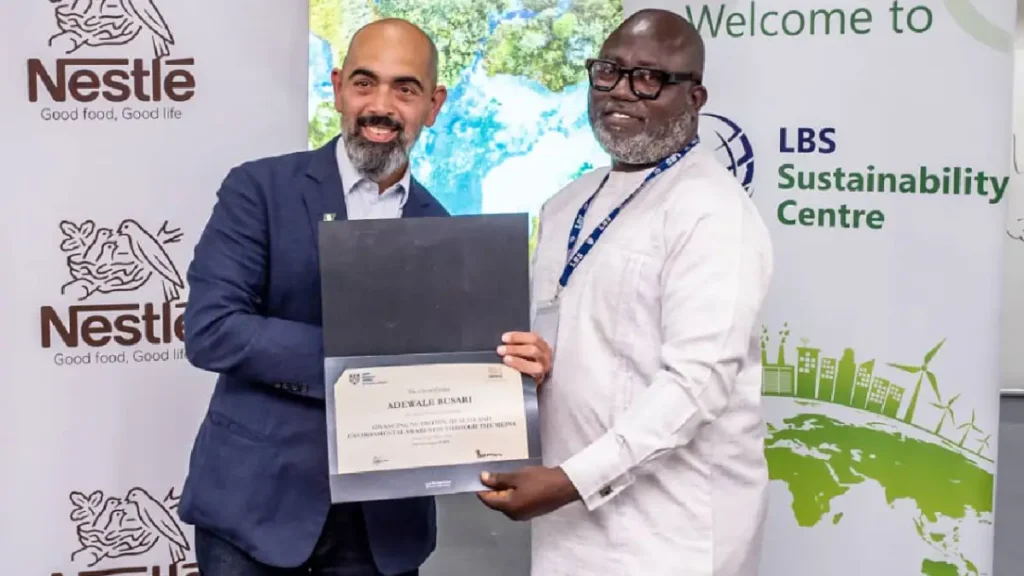
On the final day, after rigorous training facilitated by capable resource persons, the MD/CEO of Nestlé Nigeria PLC, Wassim Elhusseini, added colour to the grand finale with his presence.
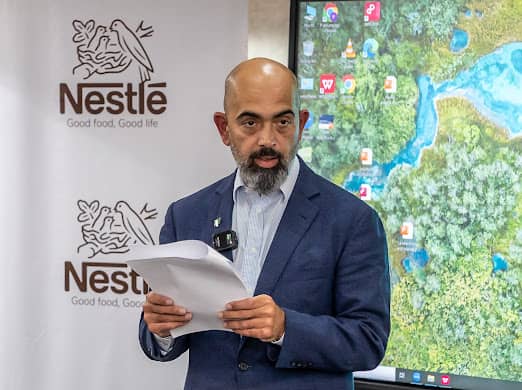
He describe the occasion as a unique one and gave more insight into the partnership between Nestlé and the school.
Below is his speech on the grand occasion.
Nestlé Nigeria’s CEO Elhusseini emphasises collaboration
Remarks by the MD/CEO, Nestlé Nigeria PLC at the Closing Ceremony 8th Nestlé Advancing Nutrition, Health and Environmental Awareness Through the Media
Good afternoon, everyone.
It is a true privilege to be with you today as we mark the closing of the 2024 cohort of Nestlé Advancing Nutrition, Health, And Environmental Awareness Through the Media Program. Over the past eight years, this initiative has evolved from a training initiative into a platform for exchange, reflection, and mutual growth. Each year leaves us more inspired than the last — because of your feedback to us and your continued collaboration to create sustainable change at scale.
We recognise that as journalists and media professionals, you are not only communicators of fact, but you are also builders of public trust, interpreters of science, and enablers of action. We therefore value your collaboration deeply and appreciate you for bringing your expertise and critical thinking into the discussions we have had during this training.
When we started this journey in 2018, our vision was clear: to work together with the media to promote informed public dialogue around the interconnected issues of nutrition, health, and the environment. Today, that vision is even more urgent — and more possible — because of the partnerships we’ve built with you.
As we close this year’s program, I’d like to share five thoughts with you. These are not just reflections, but aspirations, and I hope, shared goals that I believe can shape the future of our continued collaboration.
1. Collaboration is not optional — it is essential.
The challenges we face today — from food insecurity to climate change to preventable diseases — do not operate in silos. And neither can we. Our strength lies in our ability to collaborate across sectors, across disciplines, and yes, across the newsroom and the boardroom. We may bring different approaches to the table, but we share a common objective: building a healthier, more resilient society. We are not opposites, we are partners.
2. Data must drive the narrative.
In a time of information overload and misinformation, your role as stewards of truth is more vital than ever. But beyond accurate data, we need context, this is what makes the data make sense. This is why one of the goals of this program is to help unlock the power of data in shaping public understanding. Whether you are reporting on malnutrition rates, environmental degradation, or public health trends, data-led journalism can illuminate the full picture and guide meaningful conversations. Understand it. Demand it. Use it.
3. Context is everything.
As you know, numbers without context can mislead. Statistics on food insecurity become more powerful when it is linked to a child’s daily experience or a community’s struggle with access. A climate report becomes urgent when it reflects lived realities. Context gives data its humanity. In telling these stories, you have the ability not just to inform, but to influence mindsets and mobilise action.
4. Your voice is a force — especially when it challenges.
At Nestlé, we welcome scrutiny. We do not believe in shielding ourselves from tough questions — we believe in responding with transparency and accountability. We expect you to hold institutions like ours to high standards. Constructive criticism sharpens impact. We learn from your questions. We grow from your insights. And we are reminded, again and again, of why trust is earned, not given.
5. Progress is shared — or it isn’t progress at all.
Our company’s business principle is grounded in the belief that business must contribute to societal well-being, creating shared value. That’s why we invest in programs like this one — not just as something that is nice to do, but because we believe real change only happens when knowledge is shared. Stories have the power to democratise information and ensure that no one is left behind, and there is no one better placed to do this than you in this room today.
So, as you return to your organisations, I hope you will carry forward the momentum of the last few days. Keep asking questions. Keep building networks. Keep connecting the dots between what we eat, how we live, and the environment we depend on.
I want to thank our partners, The LBS Sustainability Centre, the facilitators, guest speakers, and the program team who have made this year’s training a success. But most of all, I thank you — for your time, your attention, and your willingness to engage. Our doors remain open, our data remains available, and our commitment to partnership remains strong. Let’s continue this dialogue.
Thank you.