


A Professor of Electrical and Computer Engineering at Texas Southern University, USA, Dr. Abayomi Ajofoyinbo, has urged the deployment of Artificial Intelligence, AI, in solving critical problems and improve the lives of the Nigerian people.
This was the thrust of a maiden webinar facilitated by a non-profit organisation, the Oye Ibidapo-Obe Foundation as part of series of transformative educational programme targeted at providing access and quality education empowerment.
Speaking at the weekend, a former senior lecturer, University of Lagos, Dr. Ajofoyinbo stated that Artificial Intelligence offers the potential to enhance human capabilities, solve critical problems, and drive significant societal progress.
According to him, “Since AI is already part of our lives, we must embrace its reality, integrate it thoughtfully into production and administration, and use it to improve both our work and ourselves.”
He highlighted this position during his presentation titled, ‘The AI imperative: Driving Innovative and Societal Advancement in the Digital Age’.
He noted various ways Artificial Intelligence has impacted the world but insisted that AI can not replace humans.
He recommended that professionals should make use of Artificial Intelligence to optimise their operations and also take advantage of the system to be a better person on the job.
In his words, “The truth is that you don’t have to rely on AI. I always say that to people, because AI is artificial, there is a tendency not to be right all the time. You must have that knowledge base yourself to be able to discern that AI can be wrong.”
Artificial Intelligence in education, health, security
He encouraged that AI should be deployed to administration sectors in areas of education advancement, health diagnosis and policing the country.
Emphasising that the integration of Artificial Intelligence into law enforcement and disaster management could significantly transform how communities respond to emerging threats.
“AI can analyse crime data to identify patterns and areas where crimes are more likely to occur,” he said.
“This predictive capability allows law enforcement to allocate resources effectively and prevent incidents before they escalate.”
He also highlighted the potential of Artificial Intelligence in disaster response, explaining how real-time analysis of weather data, emergency calls, and social media activity can help authorities allocate resources swiftly and predict the spread of natural disasters.
Adding, “AI can identify student at risk of, falling behind and dropping out and then also allow the student or the university as to what needs to be done or the student as to what needs to be done. You know, what he or she should do to be able to avoid the problem of expulsion or dropping out.”
He mentioned that Artificial Intelligence in government and public service can enhance public safety and security.
“AI analyse crime data to identify pattern and areas where crimes are more likely to occur. These are things that I think in developing countries we should deploy.
“In advanced countries, this is widely used, where you can pick a picture of somebody and then give it to the system. In a few seconds, they already know who the person is. Compare it to metric information, they already know the person’s lifestyle.”
The usefulness of Artificial Intelligence in education also took centre stage when Mr. Oluwatobi Adebiyi, the Managing Director, TechBasis Enterprises, in his presentation titled ‘From Siri to Study Buddie: Everyday AI for Students.’ intimated participants on various AI tools and applications.

He cited some of them, including Microsoft Copilot, Duolingo for language learning, and Notebook LM, which can convert texts into podcasts for easier comprehension.
The session, aimed at empowering students and professionals, featured practical insights on how AI can enhance learning, productivity, and decision-making.
Empowering the next generation through AI
He advised that AI should be adopted in education sector.
According to him, he explained that AI should not be viewed as a tool to make students lazy but rather as a catalyst for critical thinking and efficiency.
“AI requires you to be a good thinker. Before you can write a prompt, you must have thought about what you want to write,” he stated.
Adebiyi also demonstrated how those tools can help students write essays, generate emails, detect errors, solve mathematical problems, and even prepare professional documents like cover letters and resumes
Adebiyi opined, “That fingerprint and face detector you use on your phone, the autocorrect you see-those are all forms of AI. For students to get the best out of AI, they need to understand how it works,” he stated.
He further illustrated AI’s real-world applications with examples from Nigeria. “One day, I asked Gemini to recommend where I could get an African dish nearby, and it provided locations, contact details, and even closing times. As long as accurate data is being input, AI can be used to solve problems effectively,” he added.
The speaker also encouraged educators to stay ahead of the curve.
“Teachers must understand these tools and integrate them into their teaching methods. When you use AI effectively in the classroom, your students will see that you are at the top of your game,” he said.
Highlighting the potential of Artificial Intelligence to transform the educational sector, he cited its ability to identify struggling students early, provide step-by-step solutions to complex problems, and create more engaging learning experiences.
“If you use AI and you are not smart, it’s like copying someone’s work in an exam, including their name and number. But if you use it wisely, you will achieve better results,” he advised.
He also demonstrated how Notebook LM can turn study materials into audio content, enabling students to learn on the move.
“This is mind-blowing for students. You can snap a book, convert it into a podcast, and study anywhere,” he said.
In addition, Pastor Daniel Adeniyi, of TDA Leadership in his presentation titled, ‘AI without code. How To Use Artificial Intelligence to Work.’ opined that AI will not replace jobs but those who leverage on it can take over other people’s jobs.
Earlier, Dr. Oyetokunbo Ibidapo-Obe Somorin, a Family Medicine Physician welcomed the participants and highlighted some of the achievements of the Foundation.
She stated that the foundation is accessible to less privileged for improved access to quality education and health care in honour of Professor Oyewusi Ibidapo-Obe to address the foundational need of learning and wellbeing of underserved population.
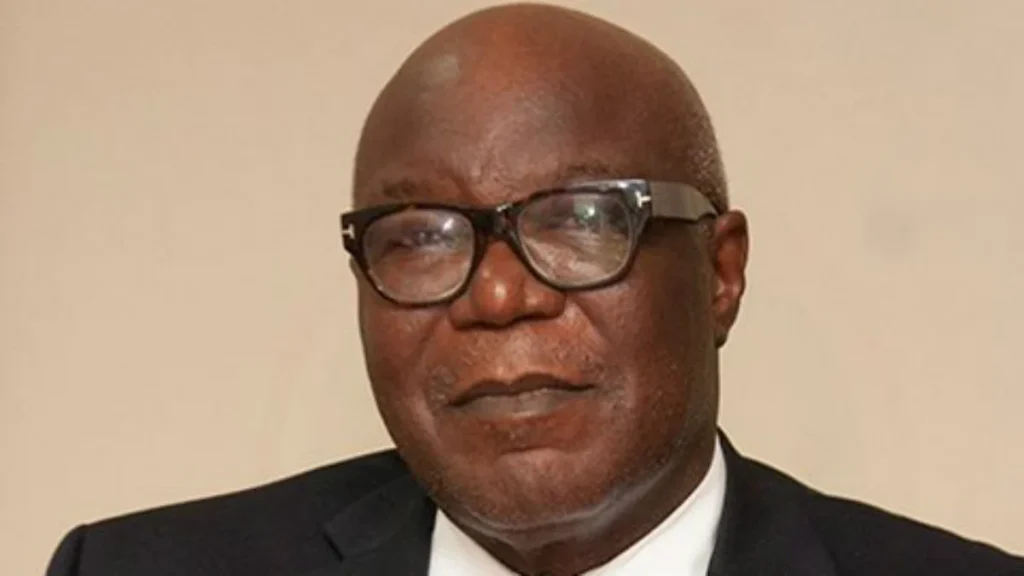
Mrs. Olusola Ibidapo-Obe, Executive Director of the Foundation expressed commitment to future programmes and urged all to use knowledge for addressing the cause of humanity.
Mrs. Ibidapo-Obe, said “We have to work on AI. Let us develop that industry. It will be helpful to us. It has been a rewarding session with thought provoking discussions on how AI is shaping our world.
“Let us remember how humanity can harness technology to improve lives, solve problems and create opportunities for the future. We encouraged you to take the lessons and apply them in various fields.”
Mrs. Abigail Ojelabi, Esq., Corporate Services Manager urged all to know how to use AI in the right way and maximise opportunities it affords.
Mrs. Funmilayo Akinremi, Program Director, Oye Ibidapo-Obe Foundation, also appreciated speakers and acknowledged their interventions.
