


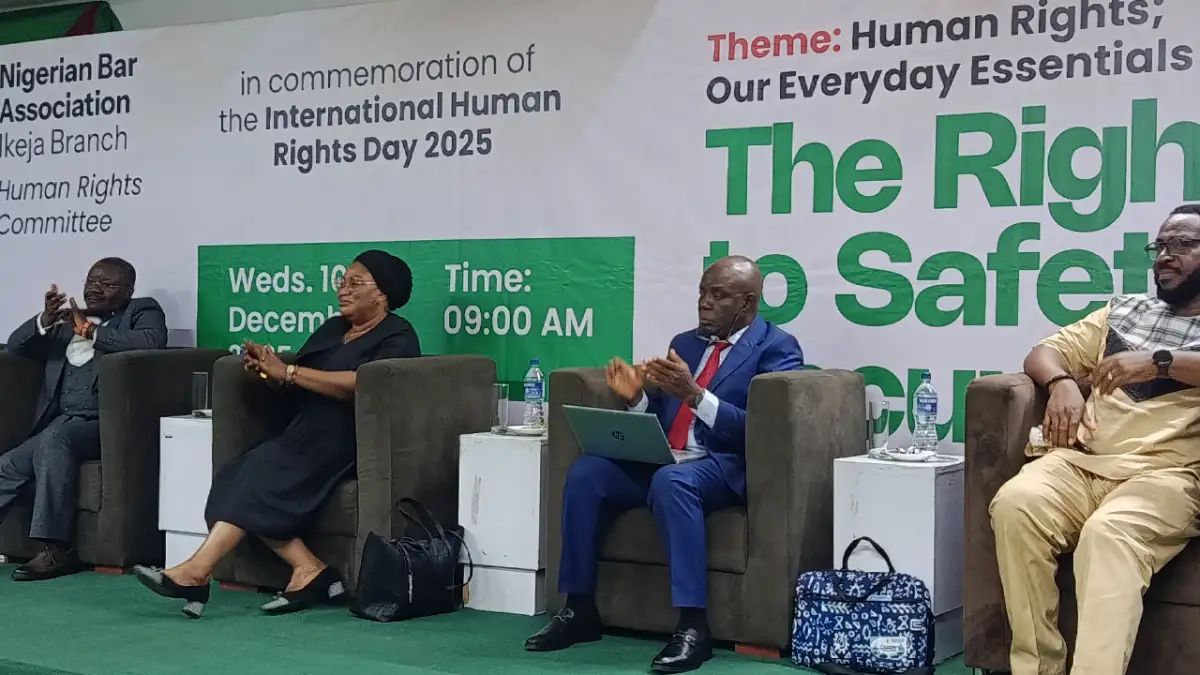
The Vice Chairperson, Nigerian Bar Association, NBA Ikeja Branch, Mrs. Chinenye Udeh has called for urgent action to safeguard the rights to safety and security of Nigerians, amid rising cases of mass killings, kidnapping, and violent conflicts across the country.
Udeh who doubles as the Chairperson of the Human Rights Committee NBA Ikeja also known as Tiger Branch made the call during the event marking the Human Rights Day 2025, themed “Human Rights: Our Every Day Essentials.”
Speaking at the event, held at the association’s Bar Centre, Mrs. Udeh noted that the escalating insecurity in Nigeria has created a humanitarian crisis that cannot be ignored.
She said millions of citizens have been displaced while countless others continue to live in fear of violence, underscoring the need for both government and stakeholders to take decisive action.
According to her, “In Nigeria, the situation is dire, ongoing conflicts, kidnapping, and killings have created a humanitarian crisis. The global community must come together to address these issues, and we must hold our leaders accountable for ensuring the safety and security of all citizens.”
She emphasised that human rights defenders have a pivotal role to play in promoting respect for human dignity and life.
“We must continue to advocate for policies and practices that prioritise human rights.
“We must support our leaders to strengthen institutions and mechanisms for protecting human rights,” she said.
NBA Ikeja to promote human rights
The NBA Ikeja also reiterated its commitment to promoting a society where every individual can live free from fear of persecution or violence, calling on citizens, leaders, and institutions to uphold their collective responsibility in defending human rights.
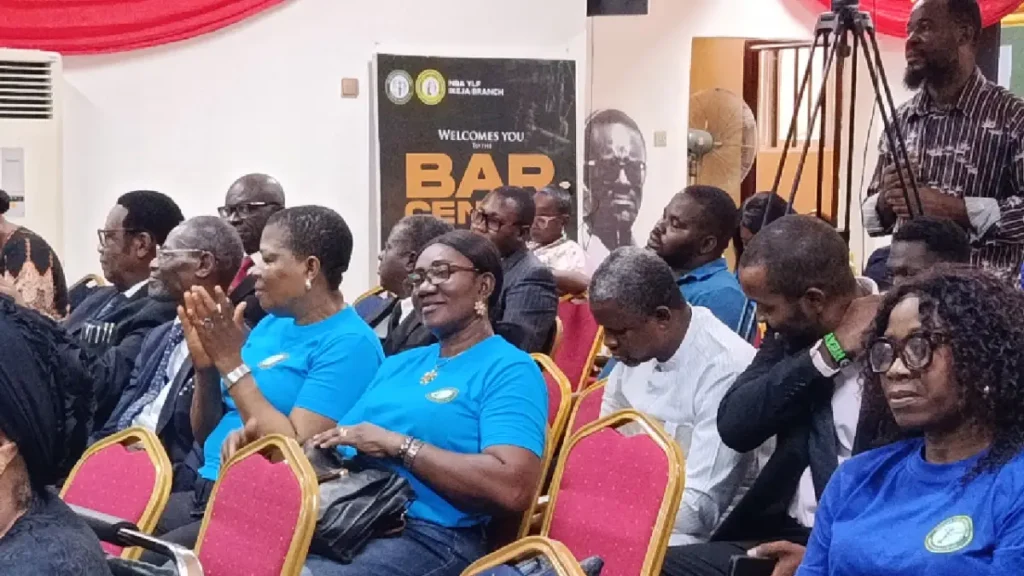
Stakeholders present at the event also called for urgent need for collective action and accountability to tackle Nigeria’s escalating insecurity.
The event brought together senior police officers, legal practitioners, civil society actors, and security analysts to discuss practical solutions for the nation’s security challenges.
The security-focused gathering featured perspectives from legal practitioners, civil society actors, and security experts, including the Assistant Inspector General of Police, AIG Adegoke Fayoade in charge of Zone 2 Command.
Represented by the Deputy Commissioner of Police, Olubodi Fakeye, provided critical insights into the operational challenges facing the Police in Lagos and other regions.
Highlighted were the persistent issues of resource constraints, community policing, and the shared responsibility of citizens in securing their lives and property.
The police perspective emphasised that despite constitutional mandates, the system requires the support of all Nigerians to function effectively.
Speaking further on behalf of the AIG Fayoade, the representative noted the importance of individual and community involvement in combating insecurity.
“Security is not the responsibility of any single agency.
“We must work together; government, police, and citizens—to ensure safety. Community policing and accountability are critical, but citizens must also play their part.”
Professor Kunle Olawunmi was on hand for the keynote speech.
Human rights advocates and members of the NBA engaged the panel with questions about government responsiveness, police accountability, and citizens’ rights to protection.
A participant, Mrs. Lillian Ubebo, questioned the adequacy of government provision for policing, citing repeated armed robberies at her home and the necessity of spending personal funds to assist law enforcement.
The AIG’s representative acknowledged these gaps, stressing that resource constraints and systemic challenges often hinder prompt police response.
Among the panelists, prominent activist and public commentator Omoyele Sowore delivered a critique of Nigeria’s security architecture.
Sowore argued that systemic neglect and structural failings, rather than ethnic dynamics alone, are central to the country’s insecurity.
“Security is meant for the tiny 1% in power,” he said, highlighting the disproportionate allocation of police resources to VIP protection.
Sowore also pointed to historical patterns of injustice, including the treatment of figures like Nnamdi Kanu, as contributing to low-level conflicts and vigilantism across the country.
Legal practitioners at the event, including senior members of the Tiger Branch, emphasised the role of lawyers in safeguarding citizens’ rights. They argued that lawyers should actively engage in public interest litigation to hold the government accountable for failures in providing security.
The discussions highlighted that security is not only about law enforcement but also about legal advocacy and civic engagement.
The panel also addressed the complex dynamics of ethnic and pastoralist conflicts, with references to the Fulanese community and their historical mobility, drawing parallels to the Bedouin in Israel.
The discussion stressed the importance of understanding context and leveraging local knowledge in security operations, a point reinforced by both AIG Fayoade’s representation and Sowore’s analysis.
Closing the session, the moderator, an High Court of Lagos State judge, Justice Olubunmi Abike-Fadipe called for renewed civic responsibility, urging citizens to move from passive observers to active participants in security and governance.
We all have a role to play, Whether through legal action, community engagement, or advocacy, accountability and collective responsibility are key to resolving the challenges we face,” she said.
The NBA Ikeja, the Tiger Branch, alongside civil society partners, reaffirmed their commitment to continue facilitating discussions that bridge gaps between security agencies, legal actors, and the public, ensuring that security policies are informed, inclusive, and actionable.
Professor Emmanuel Edem Okon, Kuti Ezebiro, were present at the event.
