


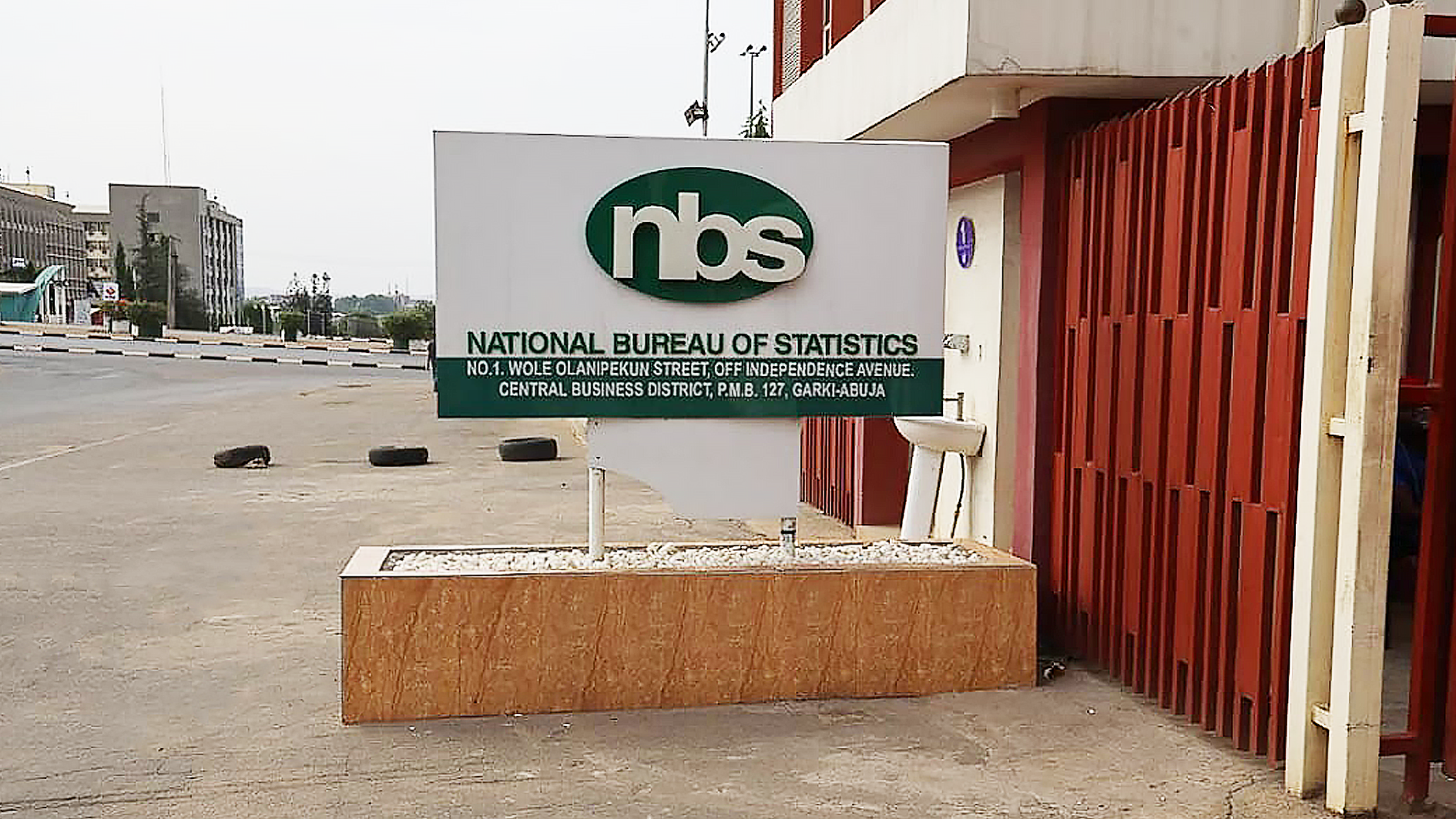
Nigeria has launched its first-ever National Household Survey on Climate Change, a landmark initiative designed to strengthen climate governance and provide evidence-based insights into how climate change affects households across the country.
The survey, co-led by the National Bureau of Statistics, NBS, and the Gender Inclusive Climate Change Governance, GENCGOV, research programme, is expected to generate nationally representative data on the impact of climate change across Nigeria’s five climatic zones.
The initiative, funded by UK Research and Innovation, UKRI, integrates gender and intersectional analysis into climate research, making it the first of its kind in Nigeria.
According to organisers, the National Household Survey on Climate Change was held with support from the University of Bradford and Nigerian partners including the Environmental Law Research Institute, ELRI, Human and Environmental Development Agenda, HEDA, Network of University Legal Aid Institutions, NULAI-Nigeria and the Environmental Defenders Network, EDEN.
Survey targets inclusive climate governance
Organisers said the National Household Survey on Climate Change goes beyond measuring climate impact by examining who bears the greatest burden, who participates in decision-making and what communities consider priority support needs.
The survey adopts an intersectional framework that considers gender, age, livelihood, location, access to resources and decision-making power.
Speaking at the launch, Dr. Pedi Obani, Associate Professor at the University of Bradford and Principal Investigator of GENCGOV, said: “Without gender-disaggregated data, climate policy is flying blind.
“This groundbreaking national survey marks a major step toward inclusive, evidence-based climate governance in Nigeria by generating critical insights into how climate change affects women and men differently across diverse climatic zones.
“The findings will help shift climate governance from broad assumptions to inclusive, data-driven action.”
She added that the initiative would strengthen Nigeria’s credibility in global climate negotiations and improve gender-responsive policymaking.
“At GENCGOV, we believe that climate governance must be inclusive by design. When women and marginalised groups are visible in the data, they become visible in policy, and that leads to stronger institutions, more resilient communities, and better climate outcomes for everyone,” she said.
Experts highlight importance of data-driven policies
The Executive Director of the Environmental Law Research Institute, Professor Olanrewaju Fagbohun, SAN, described the launch as “a watershed moment” in building a climate-just future.
“By embedding gender-disaggregated and intersectional evidence into national climate research, the GENCGOV programme, in collaboration with the University of Bradford, local partners and the National Bureau of Statistics, is helping to ensure that climate policy is grounded in the lived realities of households and communities,” he said.
Fagbohun stated that the findings from the National Household Survey on Climate Change would help governments move beyond generic adaptation policies toward targeted interventions reflecting local vulnerabilities.
Similarly, the Statistician-General of the Federation and Chief Executive Officer of the NBS, Mr. Adeniran Adeyemi, said reliable and inclusive data remained critical to tackling climate challenges.
“This survey will provide critical evidence on how climate change affects households differently across the country and will support the design of responsive, evidence-based, and gender-sensitive policies and interventions for sustainable development,” he said.
Chairman of HEDA, Mr. Olanrewaju Suraju, also stressed the need for targeted climate programmes.
“The gender-disaggregated approach isn’t about dividing the issue. It’s about seeing the full picture so solutions reach the people most affected and leverage the roles everyone already plays,” he said.
Abuja conference to unveil findings
Organisers disclosed that findings from the National Household Survey on Climate Change would be presented at the GENCGOV International Conference scheduled for June 23 and 24, 2026, in Abuja.
The conference is expected to bring together academics, policymakers, civil society groups and grassroots innovators from across Africa and beyond to develop actionable and gender-responsive climate policies.
The organisers said the initiative would position Nigeria as a continental leader in inclusive climate governance while ensuring that communities most affected by climate change are not left invisible in policy formulation.
