


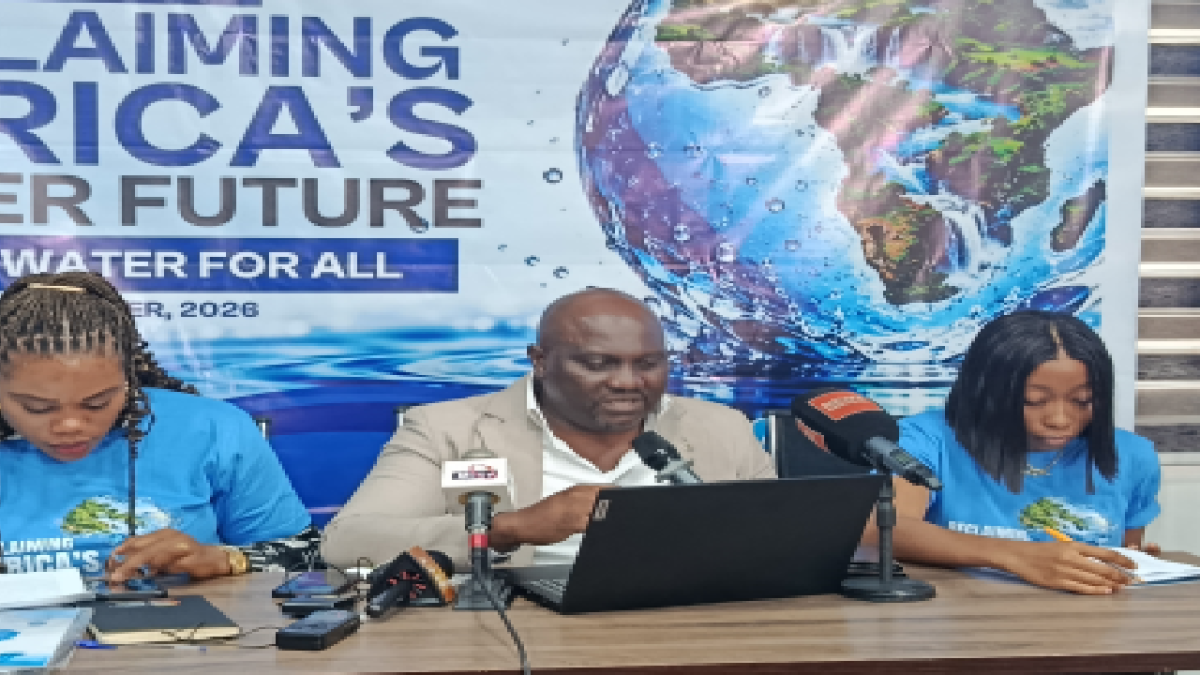
A coalition of civil society groups led by Our Water, Our Right Africa Coalition, OWORAC, has urged African governments to reject the privatisation and commercialisation of public water systems and instead increase public investment in safe, affordable and reliable water services for all citizens.
The call comes as OWORAC marks the Africa Week of Action Against Water Privatisation 2026, holding from October 12 to 18 under the theme, “Reclaiming Africa’s Water Future: Public Water for All.”
The coalition is calling for a future in which access to clean water depends on people’s needs and fundamental rights rather than their ability to pay, warning that inadequate public investment and increasing private-sector involvement could deepen inequalities across the continent.
Reclaiming Africa’s Water Future: Public water for all
For millions of Africans, getting clean water is more than turning on a tap. It can mean walking long distances to find a source, buying from vendors at high prices or relying on water whose safety cannot be guaranteed.
OWORAC says the scale of the problem remains alarming.
Globally, 2.1 billion people lacked safely managed drinking water in 2024, while 3.4 billion lacked safely managed sanitation. In sub-Saharan Africa, 167 million people relied on limited drinking-water services during the same period, accounting for more than half of the global population using services at that level.
The burden, according to the coalition, falls disproportionately on low-income households, rural communities and underserved urban and peri-urban settlements.
For families already struggling with the cost of living, the absence of reliable public water supplies can create an additional financial burden.
Research cited by the coalition indicates that low-income households in sub-Saharan African cities that depend on water vendors may pay between 10 and 20 times more per unit of water than wealthier households connected to public networks.
This means that those who can least afford essential services may end up paying the most to obtain them.
The coalition argues that governments must address these inequalities by strengthening public water institutions, investing in infrastructure and ensuring that every community has access to safe and affordable water.
Why OWORAC opposes water privatisation
As African governments grapple with infrastructure deficits, population growth, rapid urbanisation and climate-related pressures, public-private partnerships, concessions, commercial tariffs and prepaid water-meter systems are increasingly presented as possible solutions to water supply challenges.
OWORAC, however, argues that transferring public water services to private commercial interests does not necessarily resolve the problems of access, affordability and accountability.
The coalition warns that when access to water becomes increasingly dependent on people’s ability to pay, existing inequalities can worsen, leaving vulnerable households at greater risk of exclusion.
It also raises concerns about the management of sanitation, wastewater and solid waste, noting that inadequate waste disposal and wastewater treatment continue to contaminate water bodies, threaten public health and worsen flooding in many African cities.
Citing examples involving multinational water companies, the coalition points to allegations of environmental damage and financial mismanagement associated with some private-sector operations.
Among the examples highlighted is Veolia, whose operations have faced scrutiny over environmental concerns in Colombia and allegations by the Gabonese state concerning petroleum waste at pumping stations following years of the company’s operation.
The coalition also cites concerns surrounding Suez’s involvement in Senegal’s urban and peri-urban water systems.
These examples form part of OWORAC’s argument that private-sector participation must not be treated as an automatic solution to weak public water systems, particularly where oversight and accountability are inadequate.
The coalition maintains that governments should respond to years of underinvestment by strengthening public institutions, rather than transferring responsibility for an essential service to businesses whose operations are commercially driven.
Africa Week of Action calls for public investment
The Africa Week of Action Against Water Privatisation 2026 comes at a significant moment for water governance on the continent.
The African Union has designated 2026 as the Year of “Assuring Sustainable Water Availability and Safe Sanitation Systems to Achieve the Goals of Agenda 2063.”
The launch of the Africa Water Vision 2063 and Policy, alongside preparations for the 2026 United Nations Water Conference, also provides opportunities to advance commitments on water and sanitation.
OWORAC says these initiatives must translate into concrete action that improves access to water for communities across Africa.
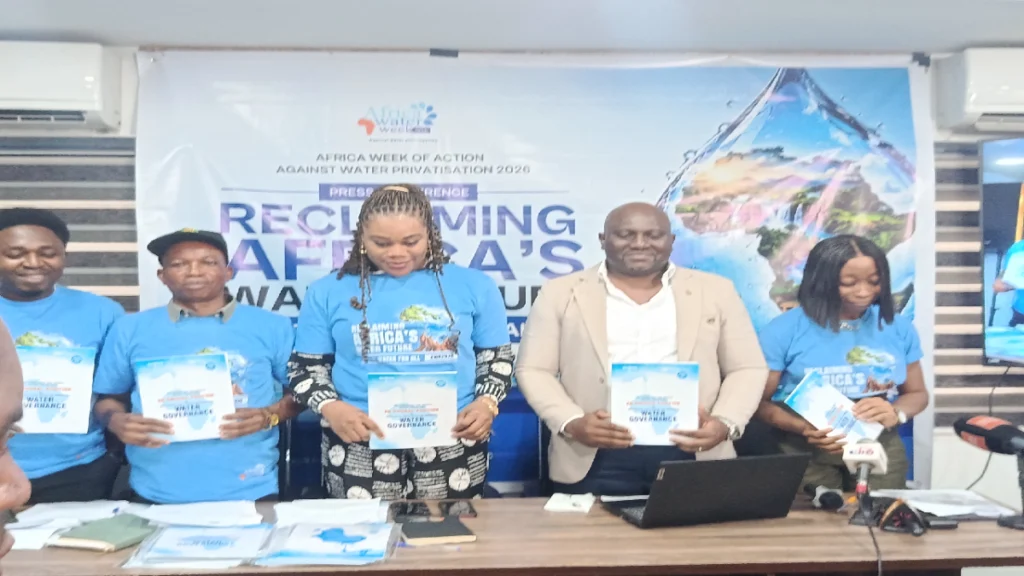
As part of this effort, the coalition has developed a position paper titled Implementing the Africa Water Vision 2063: An OWORAC Coalition Position on Water Justice, Public Financing and Democratic Water Governance.
The document examines opportunities and gaps in implementing the Africa Water Vision 2063 and proposes measures to ensure that water governance is grounded in human rights, adequate public financing, accountability and community participation.
The coalition is asking African governments to prioritise universal access to safe, affordable and reliable water and sanitation; establish measurable national and regional financing commitments; and adequately fund public water institutions and utilities.
It is also demanding transparency in water-related contracts, financing arrangements, tariffs, allocations and expenditure, alongside meaningful participation by communities, workers, women and other affected groups in decisions concerning water resources.
In addition, OWORAC is calling on governments to reject privatisation, commercialisation, concessions, public-private partnerships, outsourcing, prepaid water-meter systems and other arrangements that transfer control or delivery of public water services to commercial interests.
The coalition brings together civil society organisations, community groups, workers, women, young people and water justice movements across the continent.
Its members include Corporate Accountability and Public Participation Africa, CAPPA, the Senegalese Water Justice Network, Water Citizens Network/Revenue Mobilisation Africa in Ghana, Green Scenery in Sierra Leone, Voices for Water in Zimbabwe and the Biodiversity and Biosafety Association of Kenya, among other organisations.
For OWORAC, the message behind this year’s mobilisation is clear: Africa’s water future must be shaped by the needs and rights of the people who depend on it.
As the week of action runs from October 12 to 18, the coalition is urging governments to turn commitments on water access and sanitation into sustained public investment, stronger institutions and accountable governance.
Ultimately, “Reclaiming Africa’s Water Future: Public Water for All” is a call to ensure that safe water is treated as an essential public responsibility and a human right, rather than a service accessible only to those who can afford its price.
