


Feminist movements must be built before crises occur and sustained beyond individual projects, campaigns and funding cycles.
These were the recommendations made by a Sudan-based Nigerian lawyer, Dr. Faizat Badmus-Busari, a Programme Director at Strategic Initiative for Women In the Horn of Africa Network, SIHA.
Dr. Badmus-Busari also urged participants on long-term investment in relationships, solidarity, collective leadership and the collective capacity of women’s organisations.
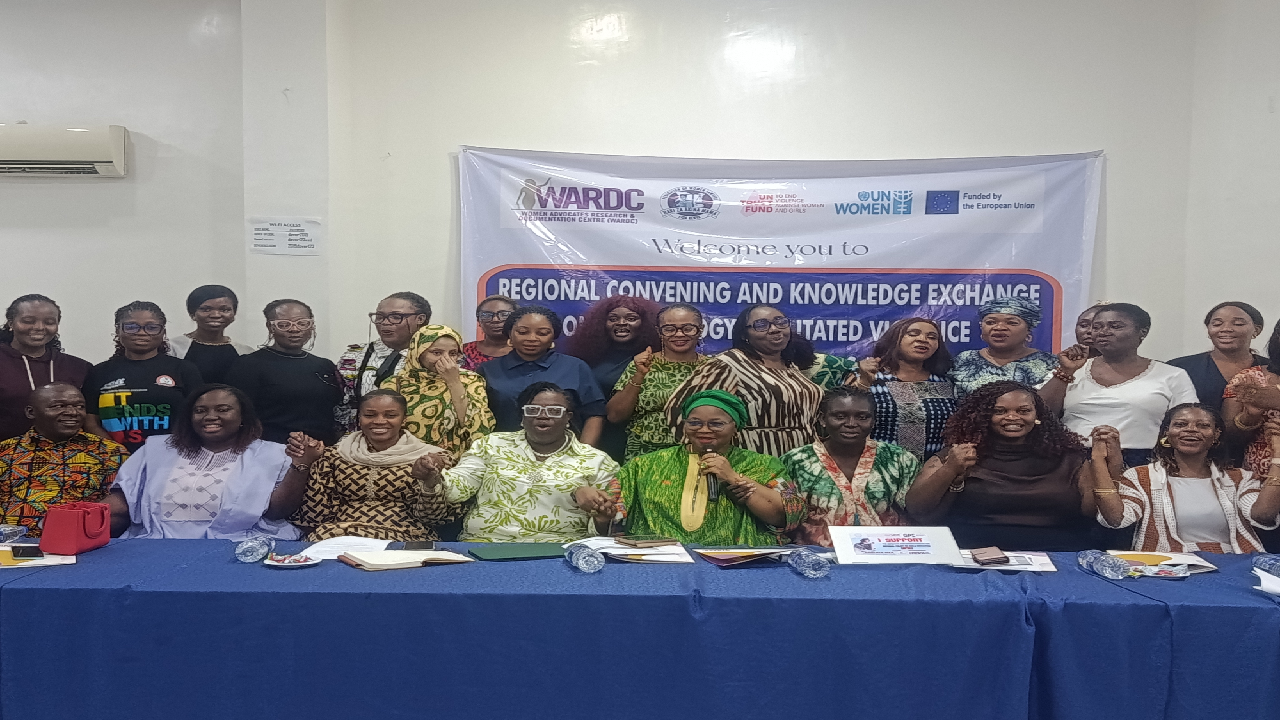
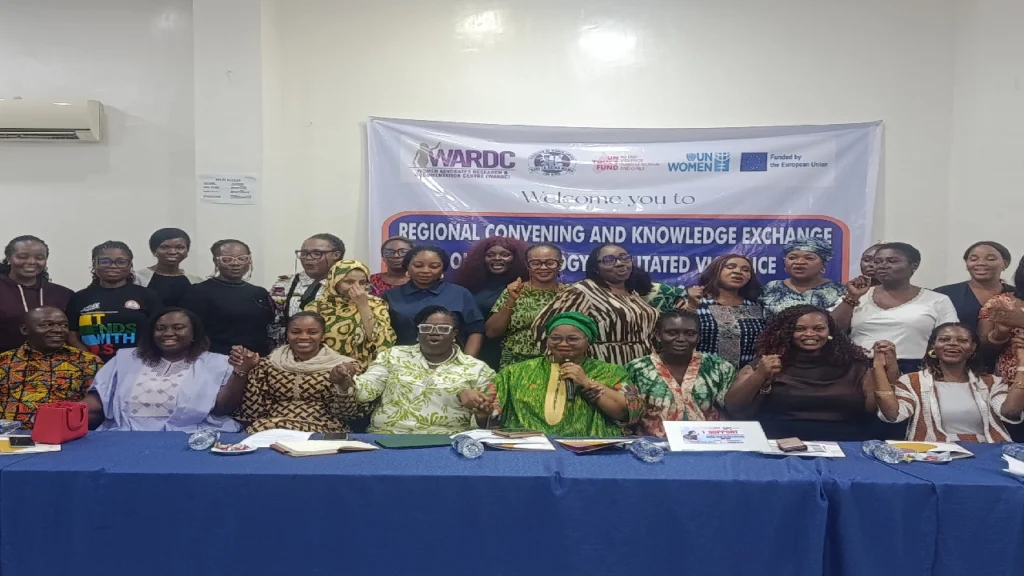
She gave this keynote speech at the Regional Convening and Knowledge Exchange on Technology-Facilitated Violence Against Women and Girls, TFVAWG, organised in Lagos by Women Advocates Research and Documentation Centre, WARDC in collaboration with its partners; FIDA Kenya, UN Women Trust Fund, UN Women and European Union.
She wants participants to work together to their advantage.
She also submitted, “That feminist movements need to place more resources and the freedom to respond when political circumstances change, or advocacy opportunities emerges unexpectedly, and I believe this should influence how we assess the success of movement building, and movement sharing programs.”
Earlier, when Ms. Emmanuella Azu, Acting Executive Director, Women Advocates Research and Documentation Centre, WARDC was speaking as to the reason for the exchange, she noted, “As much as violence against women and girls does not stop at the door steps of our homes, offices or communities, we must keep abreast with violence occurring online.”
She said that to engage with digital violence, women must understand how to support themselves and protect women’s use of technology.
“Our approach to prevention, protection, advocacy and accountability must keep pace with the same pace at which violence occur online.”
She gave this views on the background that amidst opportunities technology afford women and girls in Nigeria today, a troubling form of violence such as online harassment and cyber stalking are still prevalent and technology sometimes have other negative impacts on women.
She also observed that for women who do not know how to engage with such online abuse, they need to be informed.
She opined that as election approaches in Nigeria, women would be the target of TFVAWG.
She stressed that technology could be used in negative ways, portraying women in negative lights, while men could use it to their own advantage.
To this end, women groups in Nigeria and across Africa, exchanged ideas for two days on how to support and protect women and girls against all forms of abuses, especially on technology-facilitated violence.
Recall that the regional non-government organisation, WARDC and FIDA-Kenya have been collaborating on TFVAWG for over a year in Nigeria.
Other women groups and feminist movements from Kenya, Uganda, Sierra-Leone, amongst others have now risen from the exchange, determined to strengthen existing structures, foster a resilient feminist movement across generations, and advance collective strategies to prevent and address technology-facilitated violence against women and girls.
Speaking at the sideline of the event, Professor Abiola Akiyode-Afolabi, Founder of WARDC, said the fight on technology-facilitated violence against women and girls is important because it may be more dangerous than physical abuse if left unchecked.
“We need to build a movement around it so women can be able to respond to such online abuse.
“We need to address it as a matter of WARDC, skills, and solidarity.”
According to her, “For physical violence, often times, we have been able to identify the perpetrator, but for online violence, it could be somebody that you don’t know and it is more dangerous in case of safety and getting justice, especially if it is the person you don’t know.
“From our research and statistics, we have realised that there are different ways this happens.
“You would see situations were women go get a loan and they ask whether you want them to have access to your contact, after giving them opportunity to access your contact, you get messages from everywhere when you fail to pay the loan, sending messages to your friends, church members, saying this woman is owing them.”
Prof. Akiyode-Afolabi said the exchange would enable them to engage on how to build solidarity, how to strengthen the skills of women in order to detect when there is abuse and likelihood of abuse, because according to her, “it is actually possible to detect and also prevent it.”
Meanwhile, WARDC is already increasing the skills of women in the country, as the group last September held a capacity building for over a thousand people virtually.
Those who participated in the exchange includes; Leticia Mwavishi, Policy and Advocacy Officer, FIDA Kenya, Princess Jummai Idonije, Special Senior Assistant to the Minister of Women Affairs, Yetunde Odekunle, Lagos State Domestic and Sexual Violence Agency, Tomilayo Oduyebo, Program officer, WARDC, among others.
