


By Dennis Isong
A Certificate of Occupancy (C of O) is a legal document that serves as proof of ownership of a property in Nigeria. It is issued by the state government and serves as evidence that a particular piece of land has been surveyed, assessed, and found to be suitable for the purpose for which it is being used. A Certificate of Occupancy also provides information on the ownership of the land, the purpose of the land, and any encumbrances or restrictions that may be attached to it.
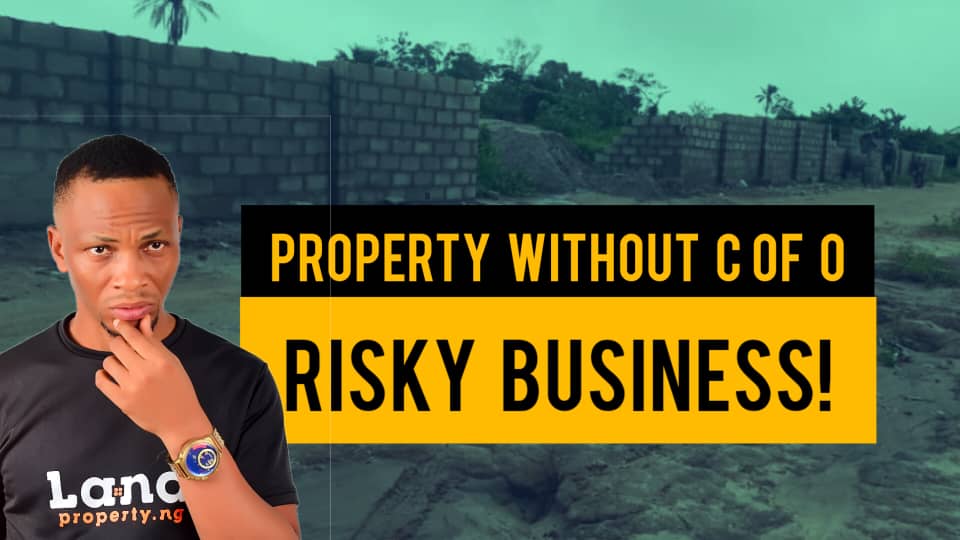
Unfortunately, many property owners in Nigeria neglect to obtain a Certificate of Occupancy for their properties. This can lead to a variety of problems that can be very difficult to resolve.
In this article, we will discuss some of the problems that arise when a Certificate of Occupancy is missed out in a property in Nigeria.
1. Difficulty in proving ownership:
Without a Certificate of Occupancy, it can be difficult to prove ownership of a property. This can lead to disputes between different parties claiming ownership of the same property. It can also make it difficult to sell or transfer ownership of the property.
2. Inabilit0y to access credit facilities:
Banks and other financial institutions often require a Certificate of Occupancy as collateral for loans or other credit facilities. Without a C of O, property owners may be unable to access such facilities, making it difficult to obtain funding for business or personal purposes.
3. Risk of demolition:
Properties without a Certificate of Occupancy are at risk of being demolished by the government. This is because the government considers such properties to be illegal and unsafe. This can be devastating for property owners who have invested a lot of time and money into developing the property.
4. Exposure to fraud:
Without a Certificate of Occupancy, property owners are vulnerable to fraudsters who may try to sell or lease the property to unsuspecting buyers or tenants. This can result in loss of money and legal battles that can be both time-consuming and expensive.
5. Limited resale value:
Properties without a Certificate of Occupancy typically have limited resale value. This is because most buyers prefer to purchase properties that have all the necessary legal documents in place. As a result, property owners may struggle to find buyers for their property, or they may have to accept lower prices than they would have received if they had obtained a Certificate of Occupancy.
6. Difficulty in obtaining permits and approvals: In Nigeria, many construction or development projects require various permits and approvals from government agencies. Without a Certificate of Occupancy, property owners may face difficulties in obtaining such permits, which can delay or even halt their projects.
7. Inability to obtain insurance: Insurance companies typically require a Certificate of Occupancy as a prerequisite for insuring a property. Without this document, property owners may be unable to obtain insurance coverage, leaving them vulnerable to losses resulting from natural disasters, theft, or other events.
8. Exclusion from government programs:
The Nigerian government offers various programs and incentives to property owners, such as tax breaks and subsidies. However, many of these programs require a Certificate of Occupancy as proof of ownership. Property owners without a C of O may be excluded from these programs, missing out on potential benefits.
9. Uncertainty about property boundaries:
A Certificate of Occupancy provides information about the exact boundaries of a property. Without this document, property owners may be uncertain about the exact extent of their land, which can lead to disputes with neighbours or encroachment by others.
10. Reduced marketability:
Finally, properties without a Certificate of Occupancy may have reduced marketability in the long run. As Nigeria continues to develop and become more regulated, properties without proper documentation may become increasingly difficult to sell or lease, as buyers or tenants will be hesitant to invest in such properties. This can limit the potential returns on the investment, leading to financial losses over time.
In conclusion, one of the greatest disservice you can do to yourself while buying a property in Nigeria is to overlook Certificate of Occupancy for any reason. Whether it is a property from a well known person or old property, you should have the C of O.
Dennis Isong is a top realtor in Lagos. He helps Nigerians in Diaspora to own property in Lagos Nigeria stress-free. For Questions WhatsApp/Call 2348164741041.
