


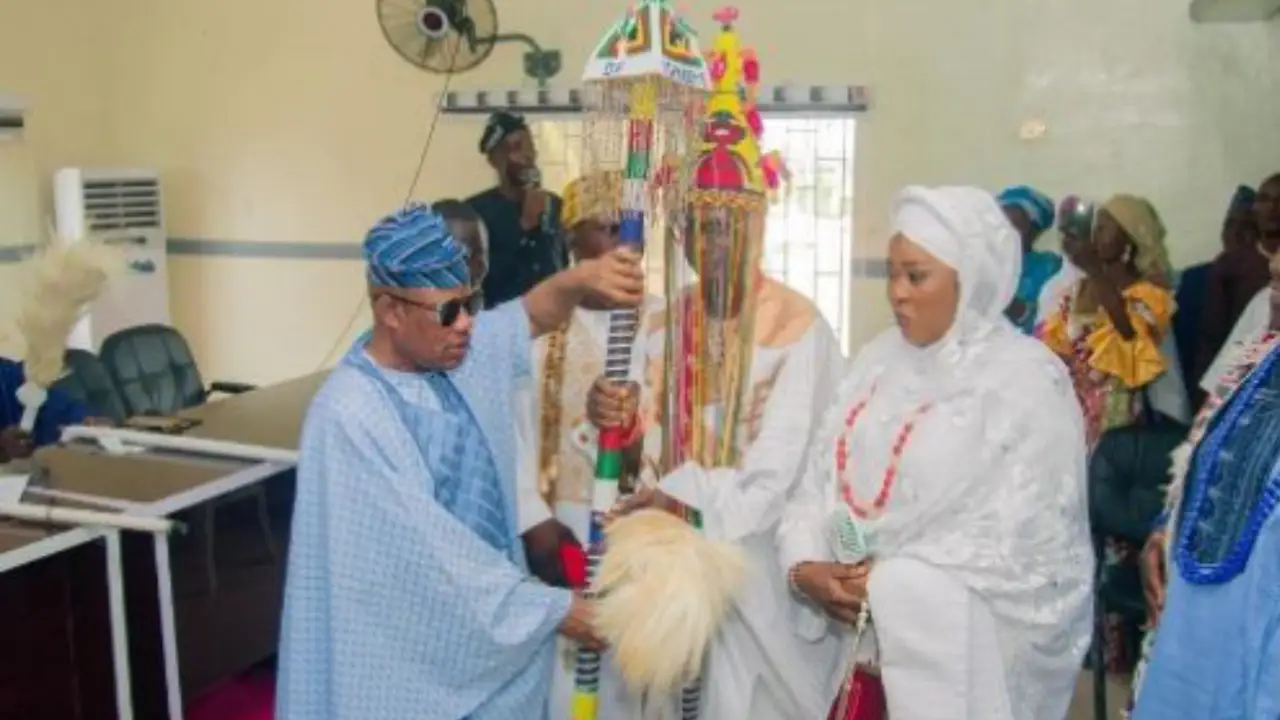
Traditional ruler of Igbooye, the Orijeru of Igbooye Kingdom, Oba AbdulRasaq Akanni Musa has been formally invested and admitted into the Epe Council of Obas and Chiefs.
The investiture ceremony was held during the recent council’s general meeting at the Epe Local Government Secretariat.
The historic induction comes exactly one year after the kingdom formally presented Prince AbdulRasaq Akanni Musa to the esteemed Council of Obas and Chiefs for their endorsement, as part of the initial process leading to the eventual installation and presentation of staff of office by the State Government.
The meeting of the Epe Council of Obas and Chiefs was presided over by the Chairman, HRM Oba Kamorudeen Animashaun, the Oloja of Epe.
In his remarks, Oba Animashaun warmly welcomed HRM Oba (Tpl.) AbdulRasaq Akanni Musa into the fold of traditional rulers within the division.
He also offered encouragement and prayers, wishing him a successful and impactful reign as the Orijeru of Igbooye Kingdom.
Following the ceremony, HRM Oba AbdulRasaq Akanni Musa hosted a brief but symbolic reception at the Orijeru Palace, where he met with key stakeholders of Igbooye Kingdom, including the Igbooye Council of Baales.
Traditional ruler appoints chiefs
During the gathering, the Orijeru made a major announcement regarding appointing traditional chiefs who will serve as pillars of traditional governance and cultural stewardship within the kingdom.
The newly appointed traditional chiefs are as follows: Chief AbdulBariu Olugbenga Quadri as Olisa; Chief Moruff Oluwadare Salami as Egbo; Chief Rufus Adedipe as Aare; Chief Yinka Oguntimehin as Balogun and Chief Rasaq Sanni as Otun.
They also include Chief Oluranti Adebanjo as Eleku; Chief Adegbenro Otunnowo as Oluti; Chief (Mrs.) Silifatu Amadasun as Iyalode; and Mrs Olusola Odusanya-Omotoso as Erelu.
In his address, Oba Akanni Musa emphasised that the selection of these chiefs reflects the cultural traditions and official declaration governing Igbooye Kingdom.
He reiterated that every ruling house and quarters of the kingdom have been duly represented to ensure fairness, equity, and inclusiveness in the traditional governance structure.
He further noted that, in addition to these foundational appointments, there are positions for honorary chieftaincy titles to be conferred on distinguished and reputable indigenes and non-indigenes of Igbooye.
However, all prospective honorees will undergo a rigorous screening process to ensure they possess outstanding moral character and are capable of upholding the honour and dignity of the kingdom.
This historic day signals a renewed commitment to tradition, unity, and progressive leadership in Igbooye Kingdom. It was a moment that celebrated both cultural continuity and a hopeful vision for the future.
