


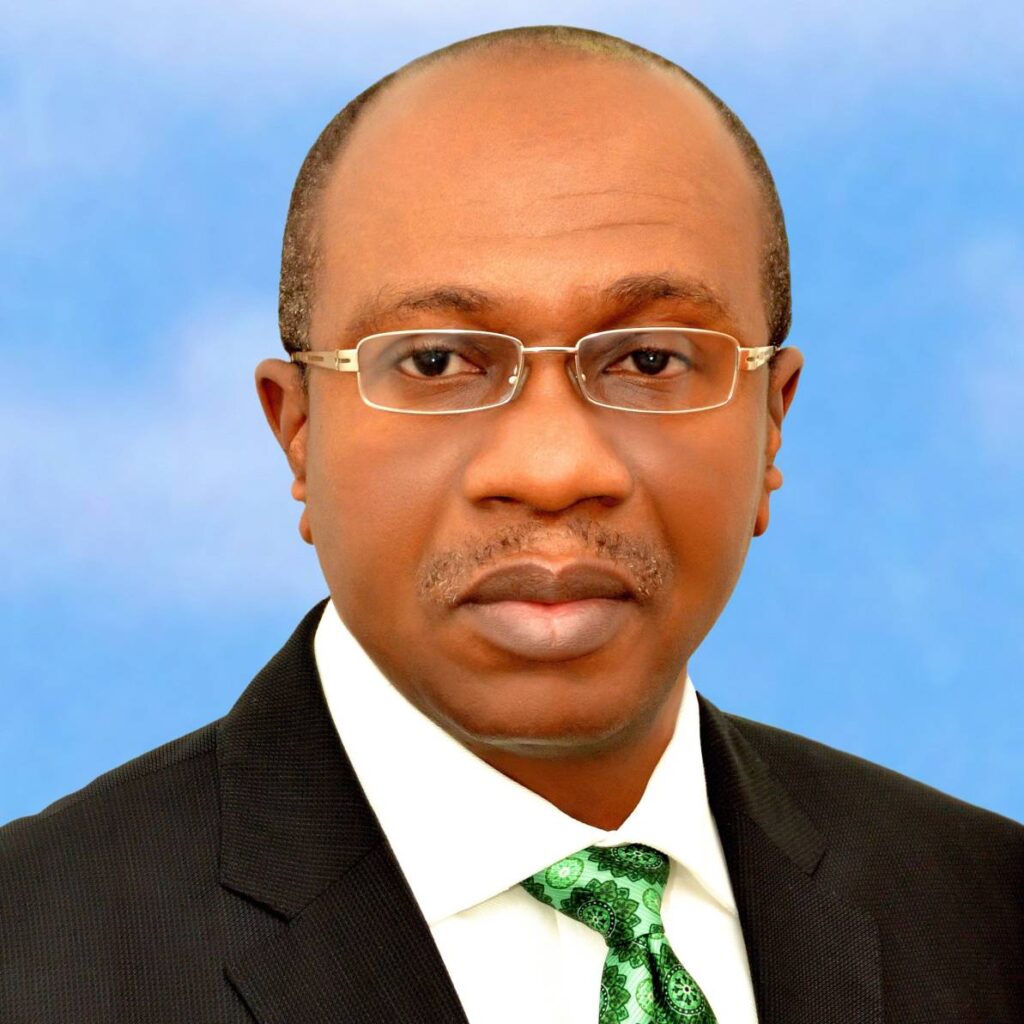
Against his expectation, trial of the embattled former governor of Central Bank of Nigeria, CBN, Godwin Emefiele continues as earlier scheduled due to the failure to reach a conclusion on the experts forensic analysis of the WhatsApp and phone conversations tendered as evidence in his the ongoing trial.
At the resumed trial on Tuesday before Justice Rahman Oshodi of the Special Offences Court, Ikeja, the court was informed that its order to examine device marked “iPhone 12” tendered as evidence in his ongoing trial was met with bottlenecks.
These were attributed to the prosecution and defence.
The examination failed to proceed as parties remain at loggerheads over the execution modalities.
Emefiele, alongside his co-defendant, Henry Omoile is facing a 19-count charge filed by the Economic and Financial Crimes Commission, EFCC, on allegations of money laundering and fraud totalling 4.5bn dollars and ₦2.8 billion.
Initial forensic analysis flawed -EFCC
According to first defendant’s counsel, Olalekan Ojo, SAN, the prosecution had on two separate occasions blocked the successful execution of the court’s order.
“The first brickwalls we faced was that the EFCC said the device cannot be exposed to the entire team,” Ojo told the trial judge.
He also submitted that on the second day, even with the Registrar clarifying that the order specifically directed for the examination of the phone and WhatsApp, the EFCC representatives failed to produce the phone when the Apple expert demanded it, meeting the team with a “categorical No.”
Recall that trial judge held that the defence had the right to conduct an independent forensic review, provided safeguards were in place to protect the integrity of the evidence.
Then the court ordered that the inspection be conducted in the presence of representatives of all parties, with each party allowed no more than one lawyer and one forensic expert.
The court also directed that the process be supervised by a court representative and conducted between 10:00a.m. and 2.00p.m. on September 24 and 26, 2025.
The judge had ruled that the chain of custody of Exhibit E (iPhone 12) must be preserved and that the exhibit must remain in the court’s custody at all times.
The SAN emphasised the need for what he termed as an unfettered assess for the experts to perform their duty, insisting that the EFCC’s actions had blocked the process.
Ojo prayed the court to issue a fresh directive to ensure proper access to the phone and its WhatsApp content.
But EFCC Prosecution Counsel, Rotimi Oyedepo, SAN, revealed that the initial forensic examination conducted by the defence’s expert was flawed and non-compliant with forensic standards regarding the controversial forensic analysis of the iPhone 12 containing crucial WhatsApp chats tendered as Exhibit E.
According to Oyedepo, the expert in question had no physical laboratory, no verifiable office, and reportedly carried out parts of the examination via a live internet connection, risking data compromise.
He told the court, “The implication of their request is that Exhibit E may be altered. The data could auto-sync and change the integrity of the exhibit.”
The prosecution counsel maintained that the iPhone remains in flight mode, ensuring it remains untampered with.
He expressed the prosecution’s commitment to transparency,
“The prosecution has never, and will never, prevent the defence from accessing the facility. But handling of the exhibit must be done properly.
Both counsel to the first and second defendants, Ojo (SAN) and Adeyinka Kotoye (SAN) urged the court to defer further testimony until the forensic analysis is completed.
The counsel submitted that the WhatsApp chats are crucial to their case and proceeding without the full report would be premature.
The judge acknowledged their worries but ruled that the prosecution must file the forensic report within 24 hours.
Justice Oshodi further directed both parties to adopt electronic service of documents moving forward to prevent further delays.
Thereafter, prosecution witness continued his testimony because he had travelled from Abuja for the hearing.
Witness continues testimony
The prosecution witness with EFCC, Alvan Grumnaan, continued his testimony while being led in evidence-in-chief that the EFCC had interviewed various individuals including staff at CBN, Zenith Bank, and others allegedly involved in the cash transactions.
The lead investigator presented multiple WhatsApp conversations: Exhibits P1–P27, detailing serial cash deliveries allegedly made to the defendants.
The EFCC operatives claimed that evidence shows a repeated flow of large foreign currency sums to the defendants, coordinated via WhatsApp and carried out through intermediaries.
He had earlier testified to multiple cash deliveries when he detailed the findings of their investigations involving Emefiele and associates.
