


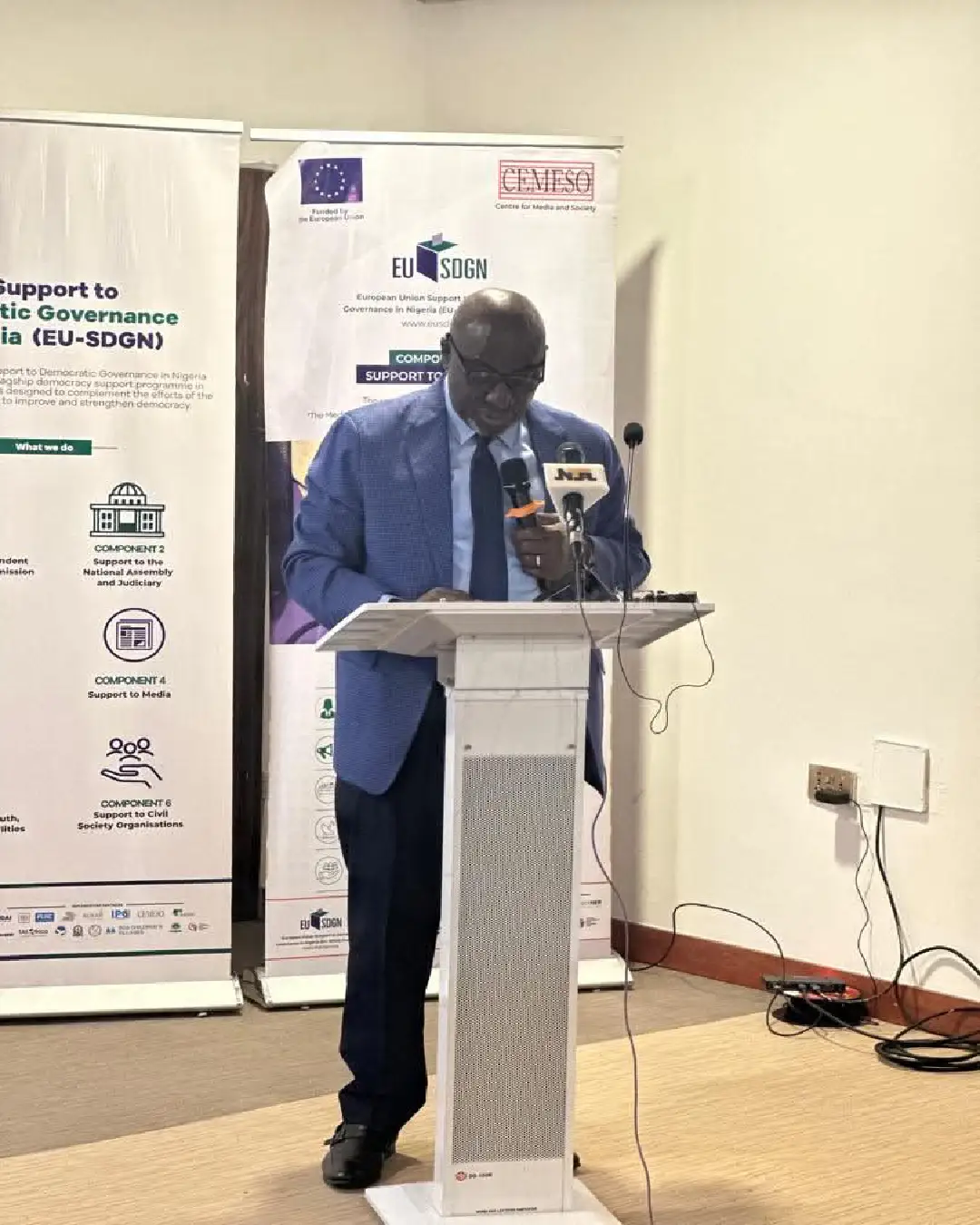
The Executive Director of the International Press Centre, Lanre Arogundade, has warned that the rise of artificial intelligence-driven misinformation, particularly deepfakes, poses a significant threat to credible journalism ahead of the 2027 general elections, urging Nigerian journalists to strengthen their fact-checking capabilities.
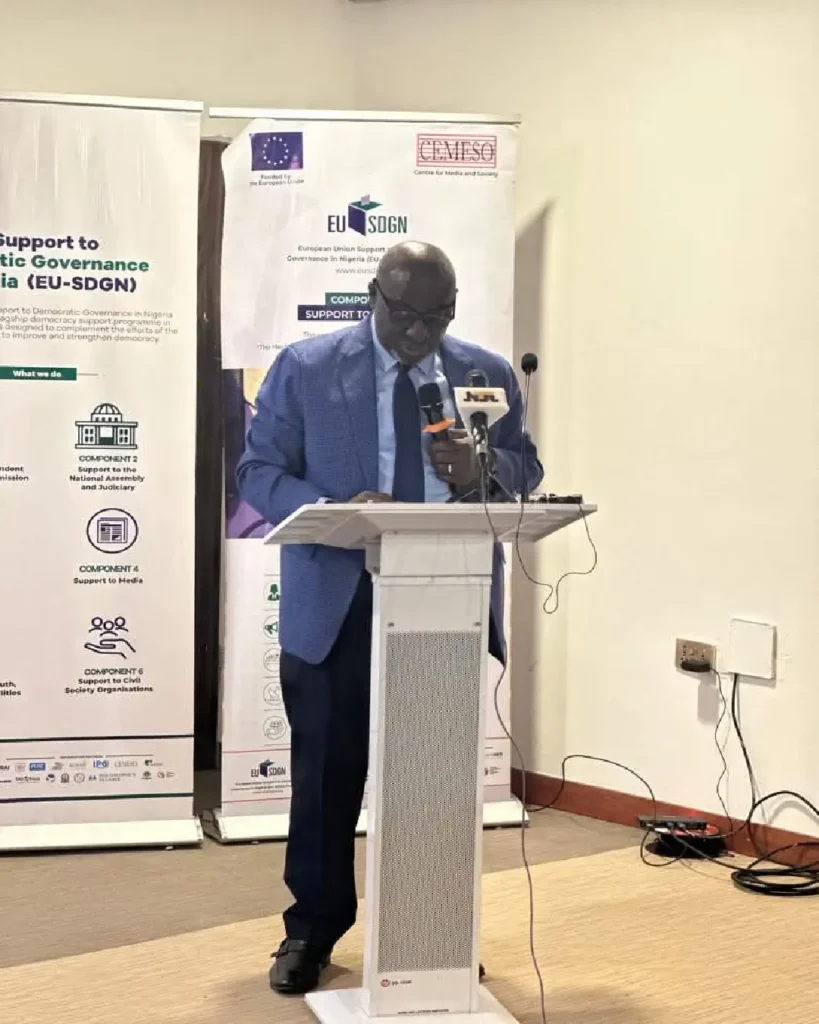
Speaking at a technical summit organised by the Centre for Media and Society, CEMESO, in Abuja on yesterday, Arogundade said the rapid evolution of AI tools has made it increasingly difficult for citizens to distinguish between authentic and manipulated information.
He noted that deepfakes, AI-generated images, videos, and audio that convincingly mimic real people and events have become a central tool in spreading disinformation.
According to him, this trend risks undermining public trust in media and distorting democratic processes if not urgently addressed.
AI misinformation threat grows
Arogundade explained that while technology has enhanced access to information, it has also enabled widespread misinformation and disinformation, often amplified through social media platforms.
He added that many users now casually dismiss or label content as “AI” without proper understanding, further complicating information verification.
“The challenge is that AI manipulative tools are evolving at a speed that outpaces efforts to counter them,” he said, stressing that identifying false content requires a combination of human judgment and technological tools.
He emphasised that despite these challenges, misinformation can be tackled through rigorous verification processes, including cross-checking sources and using digital tools to analyse multimedia content.
Fact-checking efforts expand
Highlighting ongoing interventions, Arogundade said the Nigerian Fact-checkers Coalition, NFC, comprising about 12 organisations, has significantly scaled its operations since the 2023 general elections.
He disclosed that the coalition has fact-checked over 120 claims during peak election periods and expanded its work to off-cycle elections in states like Edo and Anambra.
He added that IPC, in collaboration with CEMESO under the European Union Support to Democratic Governance in Nigeria programme, has trained journalists nationwide and produced about 100 fact-checking fellows since 2022.
Arogundade cited examples of success, including journalists who have verified over 120 false claims and won international recognition for fact-checking excellence. He also referenced tools such as the iVerify guide and the SIFT method: Stop, Investigate, Find, and Trace as essential resources for journalists.
Focus on capacity building
The IPC boss further revealed plans to establish campus-based fact-checking hubs targeting Mass Communication and Journalism students to strengthen youth participation in combating disinformation.
He also noted that IPC has extended its training to the Independent National Electoral Commission, INEC, helping to establish fact-checking units ahead of governorship elections in Ondo and Anambra States, with plans underway for Ekiti and Osun.
Arogundade welcomed the planned launch of CEMESO’s AI Fact-checking Tool Guide, describing it as a critical resource for journalists who may not have access to physical training.
Call for professional discipline
In his concluding remarks, Arogundade cautioned journalists against over-reliance on AI tools, stressing that technology does not guarantee absolute accuracy.
He urged media professionals to prioritise “journalistic common sense” and uphold the discipline of verification, noting that fact-checking remains a core principle of journalism regardless of technological advancements.
He expressed optimism that the summit would strengthen collaboration and enhance the media’s ability to combat misinformation ahead of future elections.
