


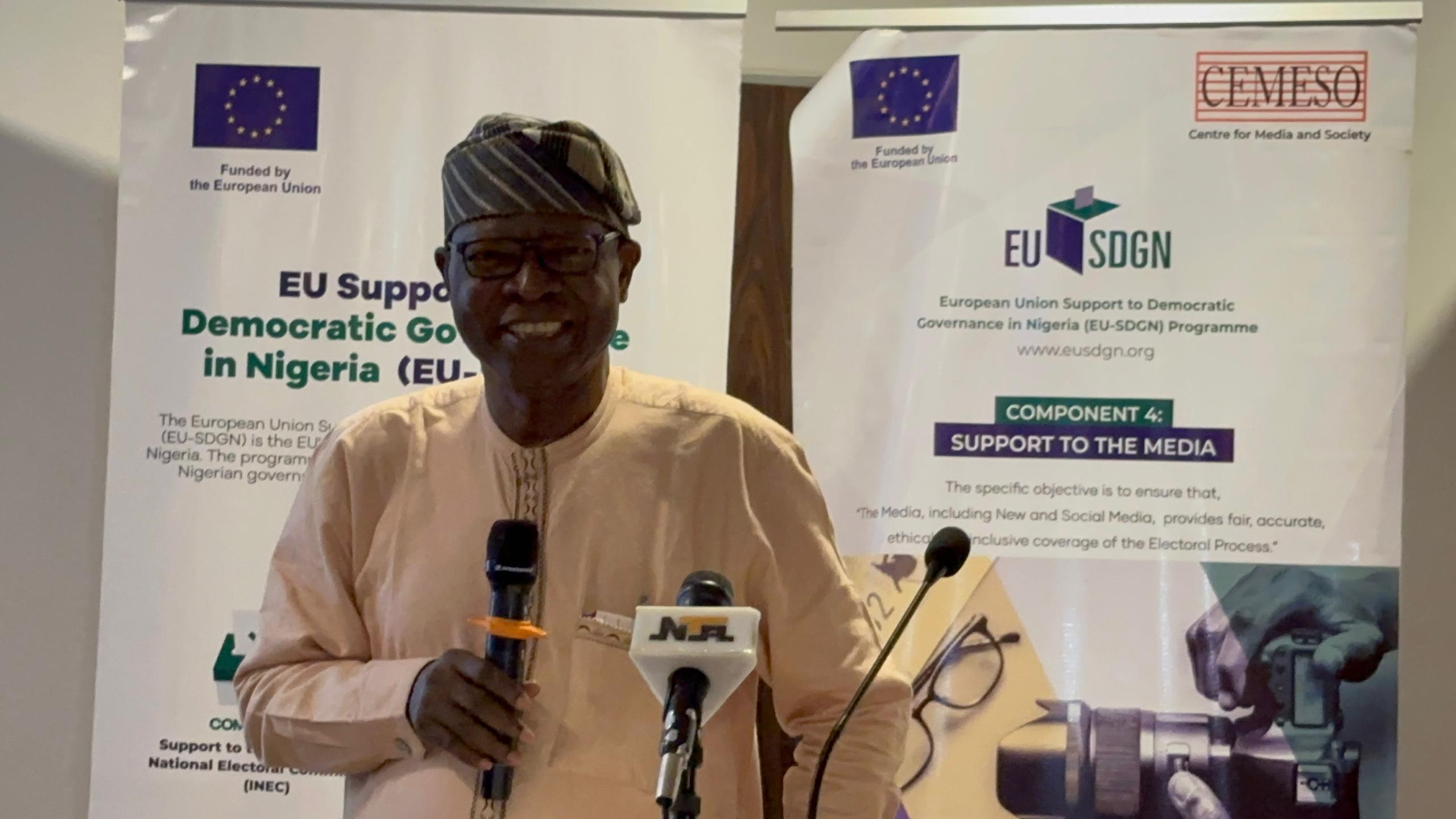
Nigeria may face the most technologically sophisticated disinformation campaign in Africa ahead of the 2027 general elections if urgent steps are not taken to strengthen fact-checking systems and media verification processes, Executive Director of the Centre for Media and Society, CEMESO, Dr. Akin Akingbulu, has warned.
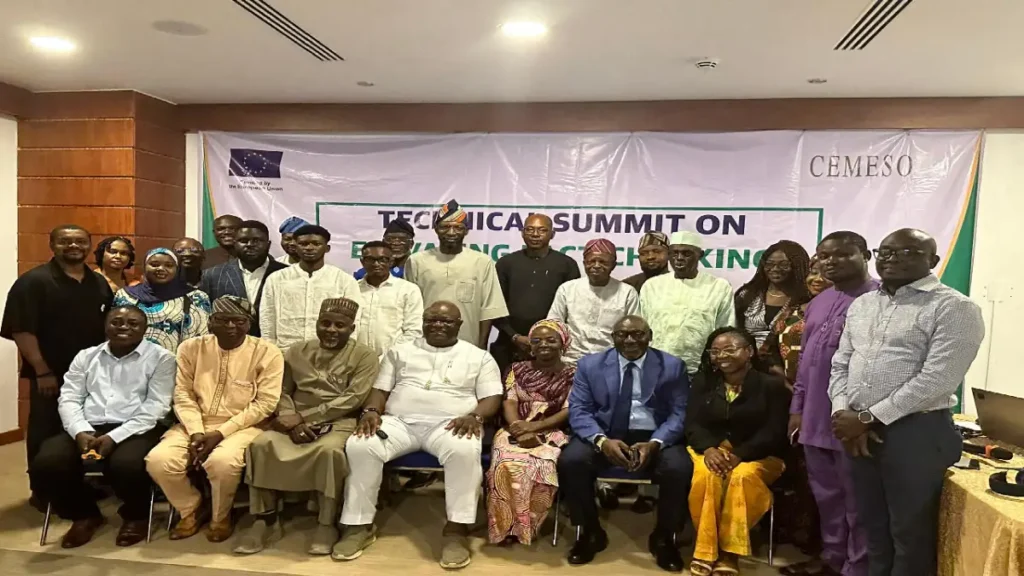
Akingbulu raised the concern on Tuesday in Abuja at a technical summit organised by CEMESO.
During the stakeholders’ engagement titled, “Mitigate Misinformation and Disinformation in the Electoral Process: Elevate Fact-Checking Capabilities of Journalists,” held at BON Octagon Hotel.
According to him, the country’s information ecosystem is under severe pressure from artificial intelligence-driven misinformation, foreign interference, weak regulatory systems, and the exclusion of vulnerable groups from electoral conversations.
He said the rapid growth of coordinated disinformation campaigns had eroded public confidence in democratic institutions, worsened political divisions, and exposed weaknesses in Nigeria’s electoral process.
“The 2027 elections will, in all likelihood, witness the most technologically complex disinformation campaign in African history,” Akingbulu said.
He explained that advances in artificial intelligence had made the creation and spread of fake content easier, faster, and harder to detect, noting that deepfake content globally increased by over 500 percent between 2019 and 2023.
The CEMESO boss cited cases in Nigeria where AI-generated videos falsely showed international celebrities endorsing presidential candidates, while cloned audio recordings of political leaders were circulated to provoke tension.
He also referenced a synthetic video circulated in June 2025 allegedly designed to inflame the farmers-herders crisis in Benue State.
Akingbulu noted that most global AI detection systems are focused on English content, leaving local languages such as Hausa, Yoruba, Igbo, and Nigerian Pidgin vulnerable to manipulation.
He further linked the rise in disinformation to declining voter participation, revealing that turnout during the 2023 elections fell to 27 percent.
According to him, disinformation campaigns deliberately exploit ethnic and religious divisions while targeting rural communities, women, youths, and other vulnerable groups.
“Youth are operating in a digital environment where 62 percent rely on social media as their primary source of political news, even as that same environment is being professionalised as a disinformation machine,” he said.
AI Fact-Checking Guide unveiled
As part of efforts to address the challenge, Akingbulu unveiled an AI Fact-Checking Guide developed to assist journalists and editors in verifying information under tight newsroom conditions.
He described the guide as a practical tool that combines artificial intelligence with human editorial judgement to improve verification processes.
The media expert said CEMESO, through its platform haltfake.org, had established a coordinated fact-checking network across Nigeria and West Africa to track and neutralise fake electoral narratives, including deepfakes and manipulated political content.
He disclosed that over 100 journalists and newsroom leaders in Ekiti State had recently undergone training organised by CEMESO and the International Press Centre, IPC.
He added that another 80 journalists, producers, and newsroom leaders from Aso Radio and Television as well as the Federal Radio Corporation of Nigeria also received targeted fact-checking training.
Concern over weak newsroom structures
Akingbulu, however, lamented the absence of structured fact-checking desks in many broadcast newsrooms, warning that verification systems remain weak despite the growing sophistication of fake content.
He called for the institutionalisation of fact-checking as a democratic necessity and urged stakeholders to support the development of Nigerian-language AI detection tools.
He also advocated transparency in digital political campaigns, insisting that paid influencer networks should be treated as part of campaign finance regulations.
The CEMESO executive director announced plans to establish Campus Newsroom Labs in tertiary institutions to train the next generation of journalists in civic education and electoral fact-checking.
EU support commended
Akingbulu commended the European Union for supporting the programme through the EU Support to Democratic Governance in Nigeria initiative.
He reaffirmed CEMESO’s commitment to collaborating with fact-checking coalitions and media organisations ahead of the Ekiti and Osun governorship elections as preparations intensify toward the 2027 general elections.
“The task ahead is formidable. The path is clear. And the moment to begin is not tomorrow. Today is the beginning of that work,” Akingbulu said.
